Te Manawataki
o Te Papa
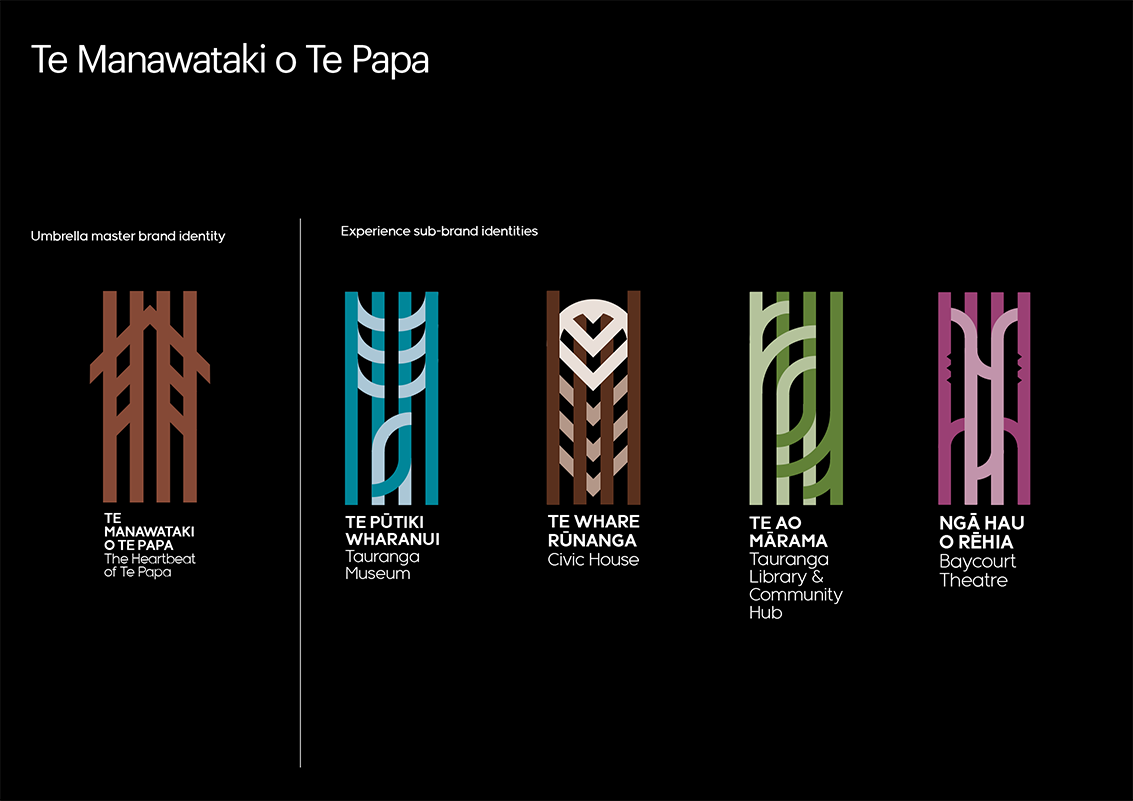
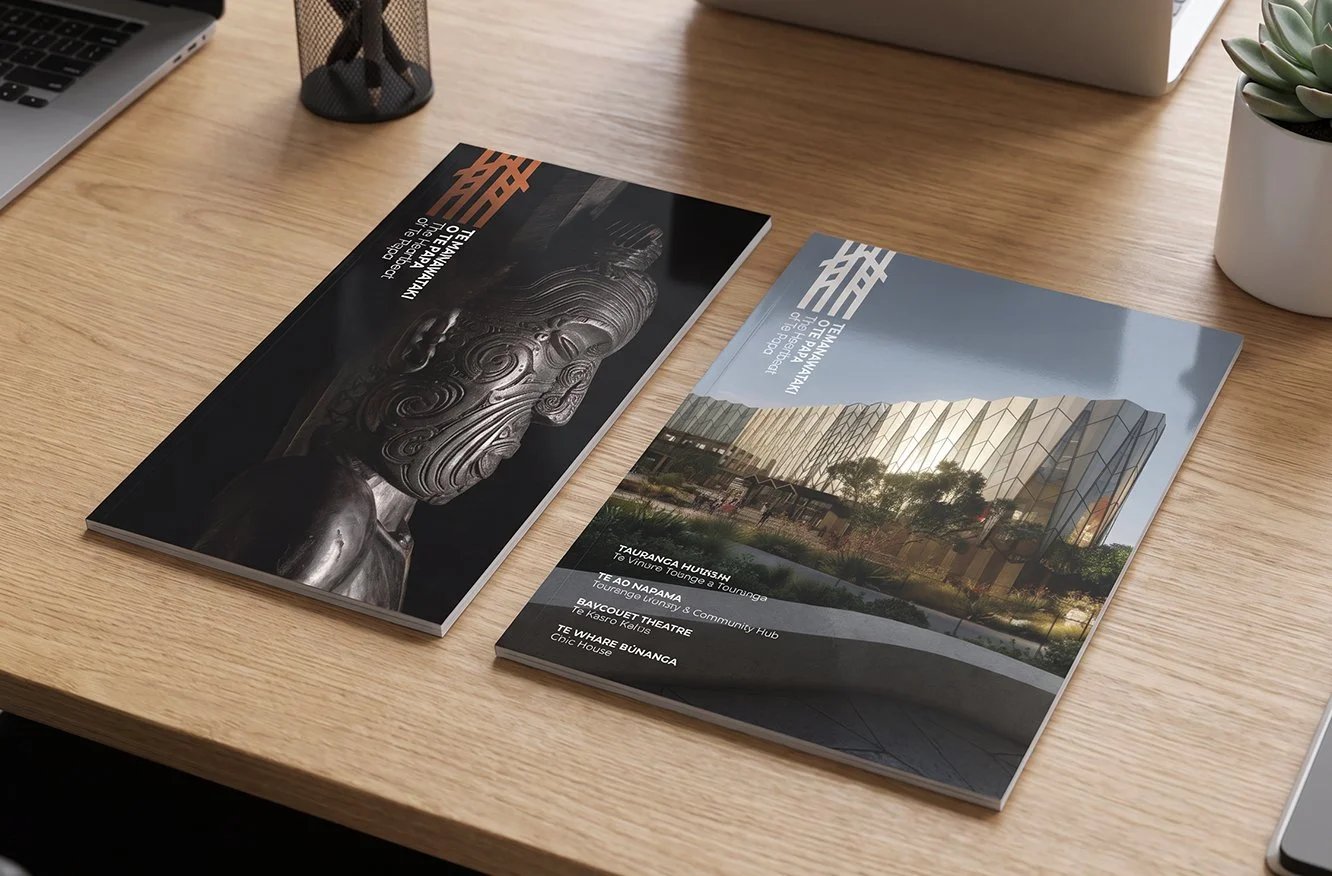
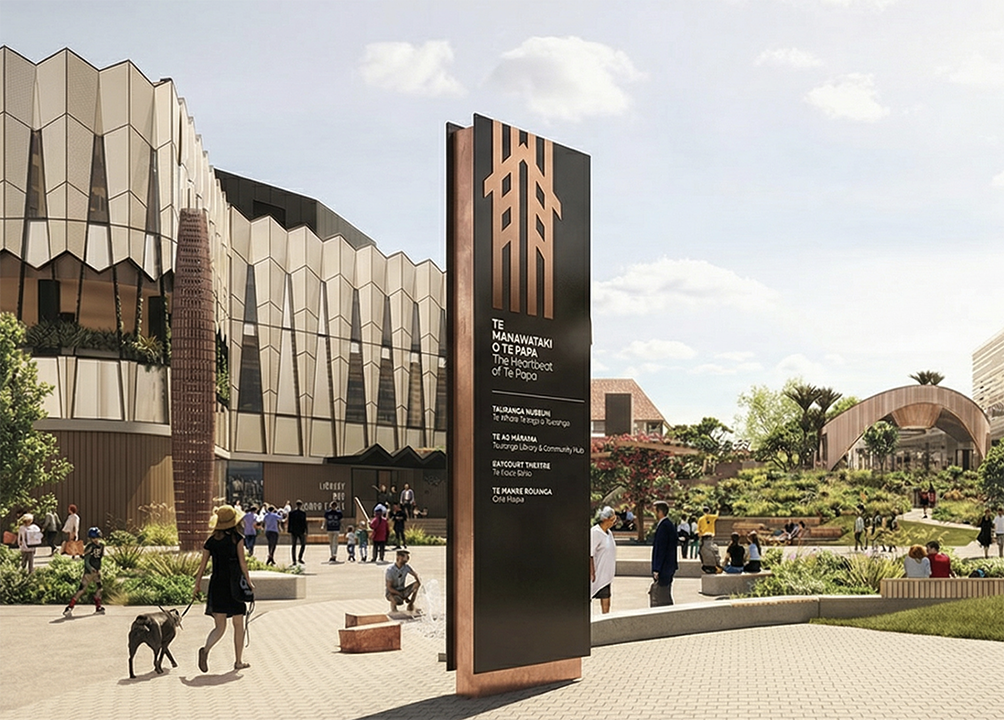
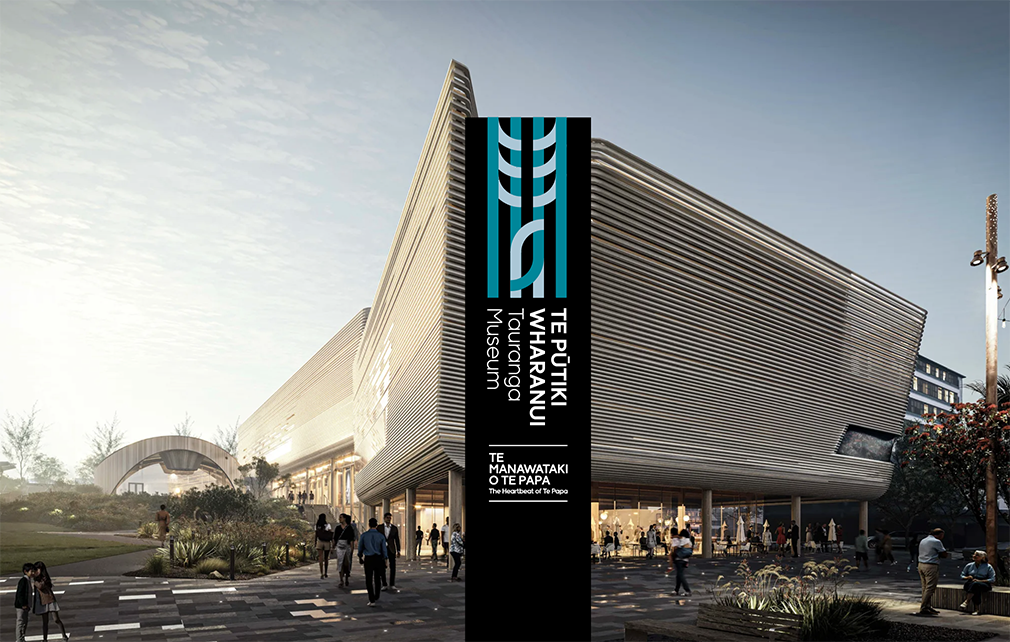
Te Manawataki o Te Papa is the new brand developed for the transformation of Tauranga city centre. It acts as an umbrella to a portfolio of Council facilities and experiences that form part of the new inner-city civic centre. These include:
TAURANGA MUSEUM Te Whare Taonga o Tauranga
TE AO MĀRAMA Tauranga Library & Community Hub
BAYCOURT THEATRE Te Hau o Rēhia
TE WHARE RŪNANGA Civic House
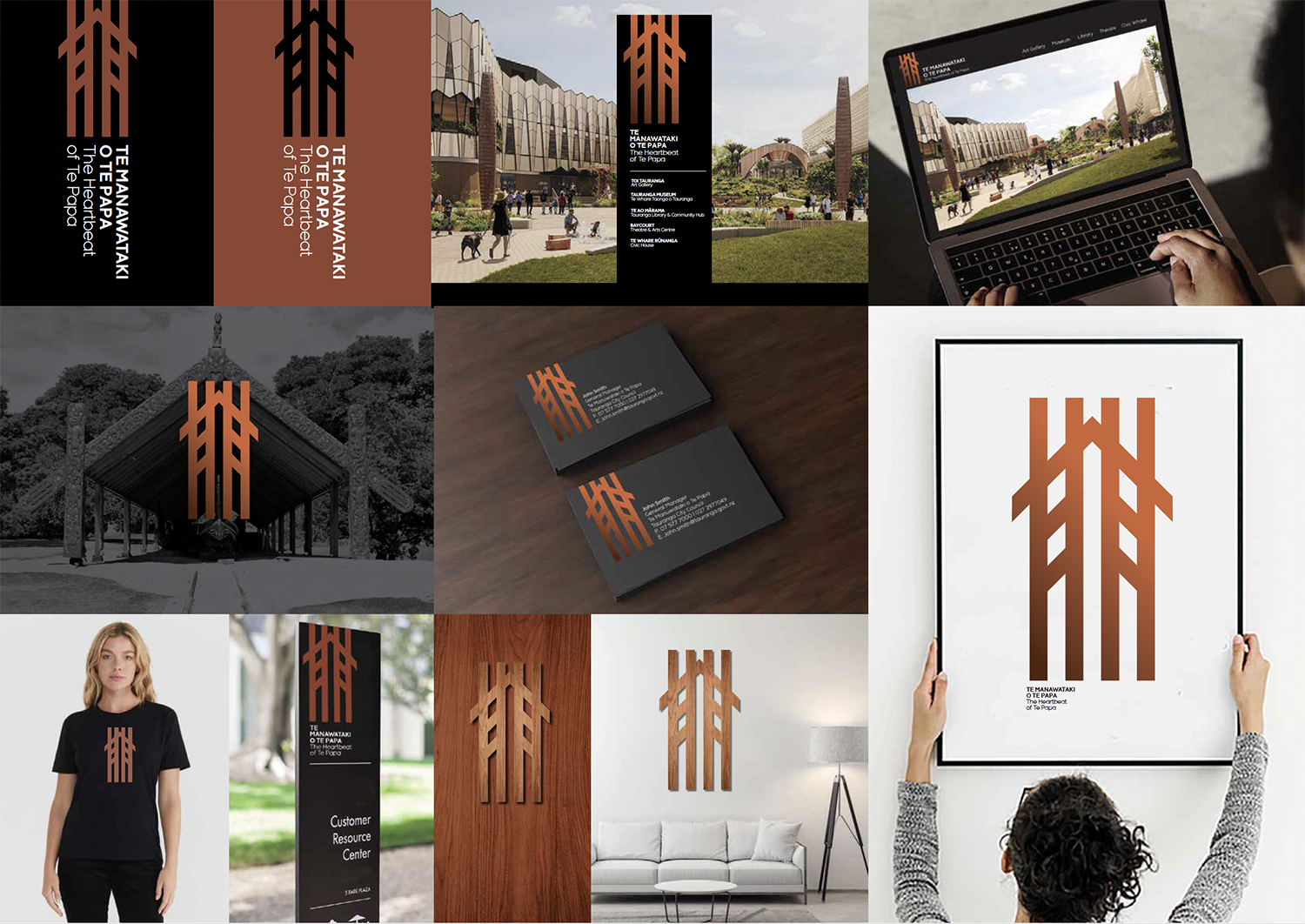
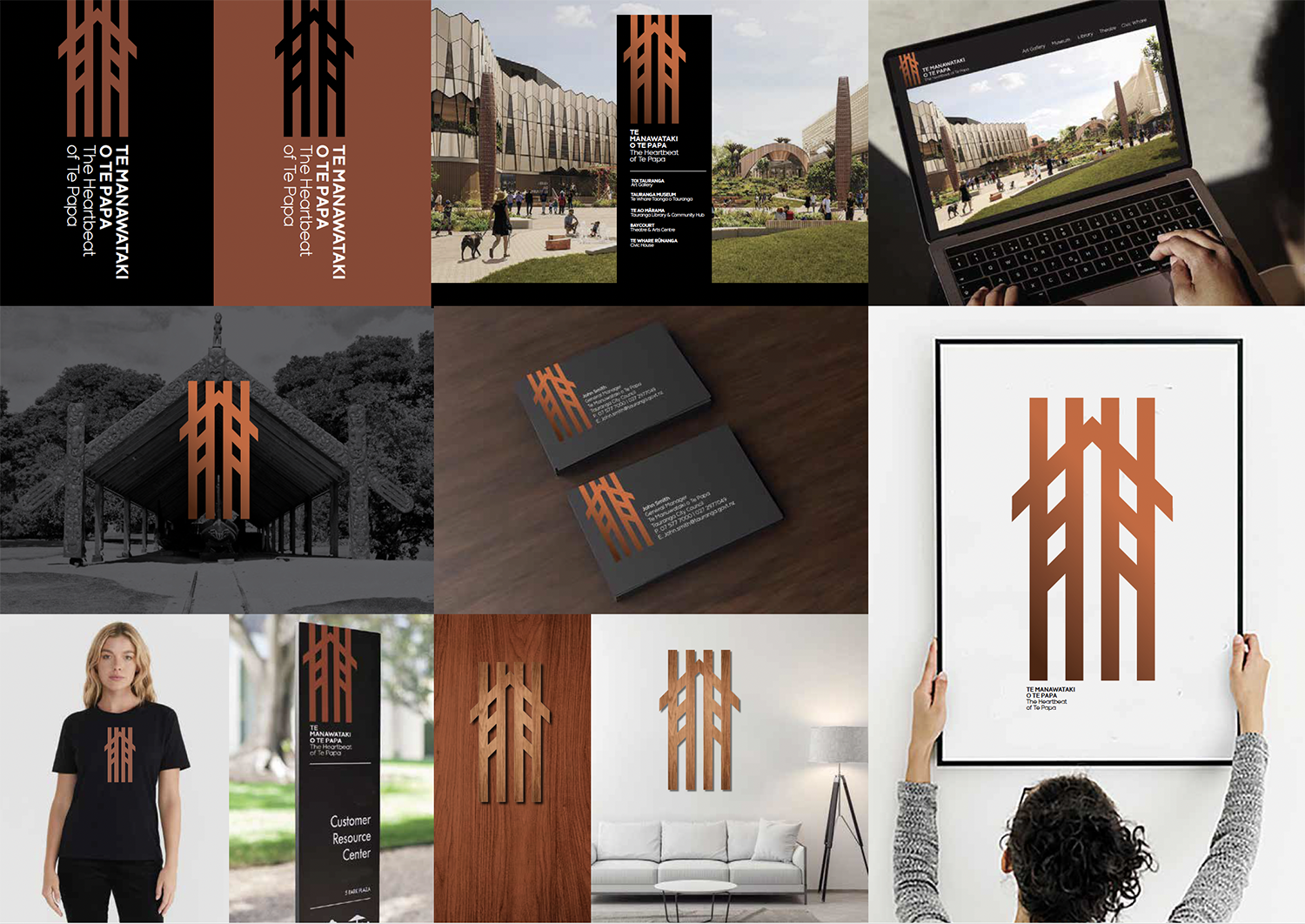
The aim of the brand is to create a connected family of facilities and experience through a cohesive and recognisable identity system that will work for each individual organisation as well as the Te Manawataki o Te Papa precinct as a whole. This approach is designed help the city build a stronger united community hub for the city and help promote civic experiences more effectively and efficiently.
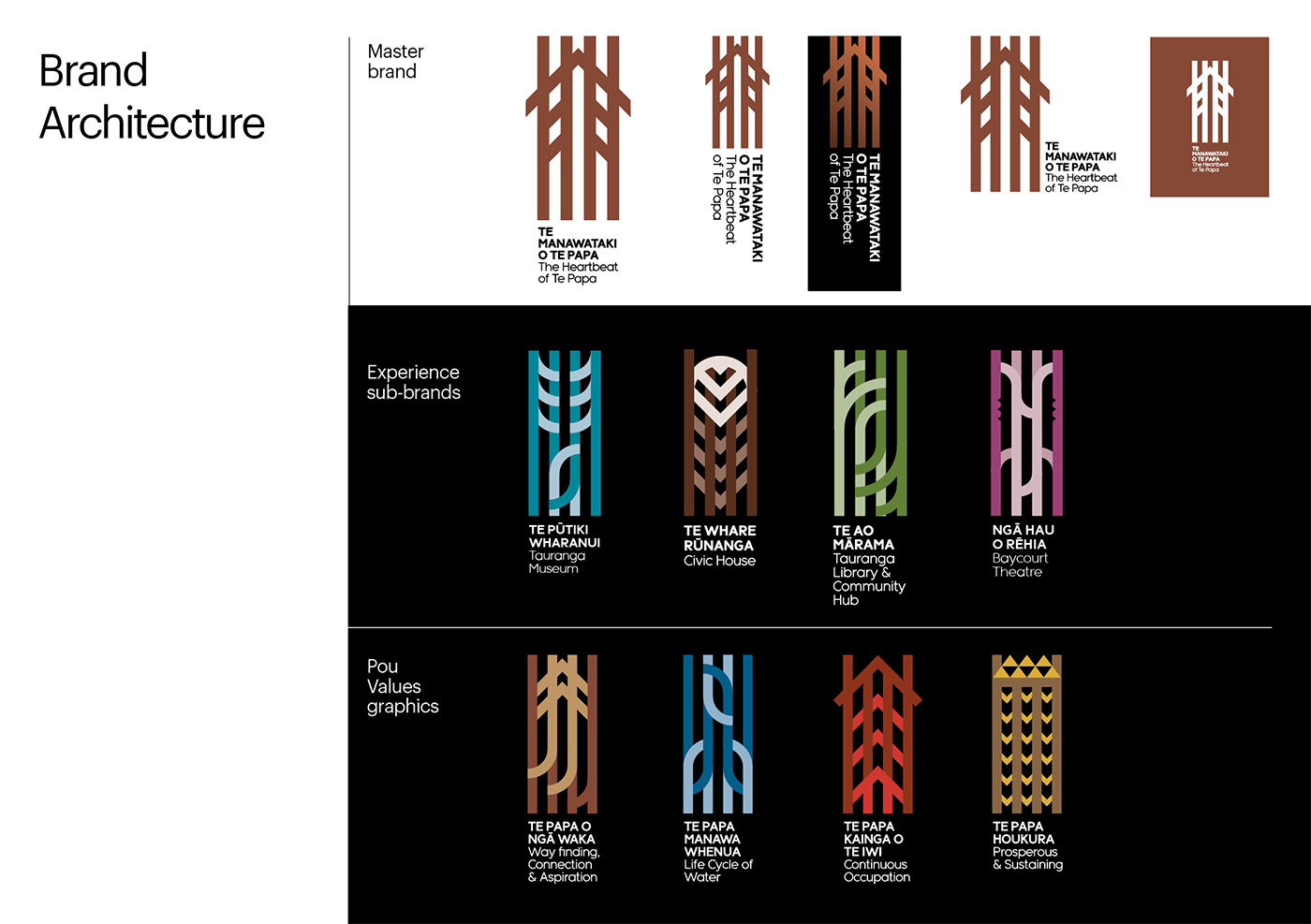
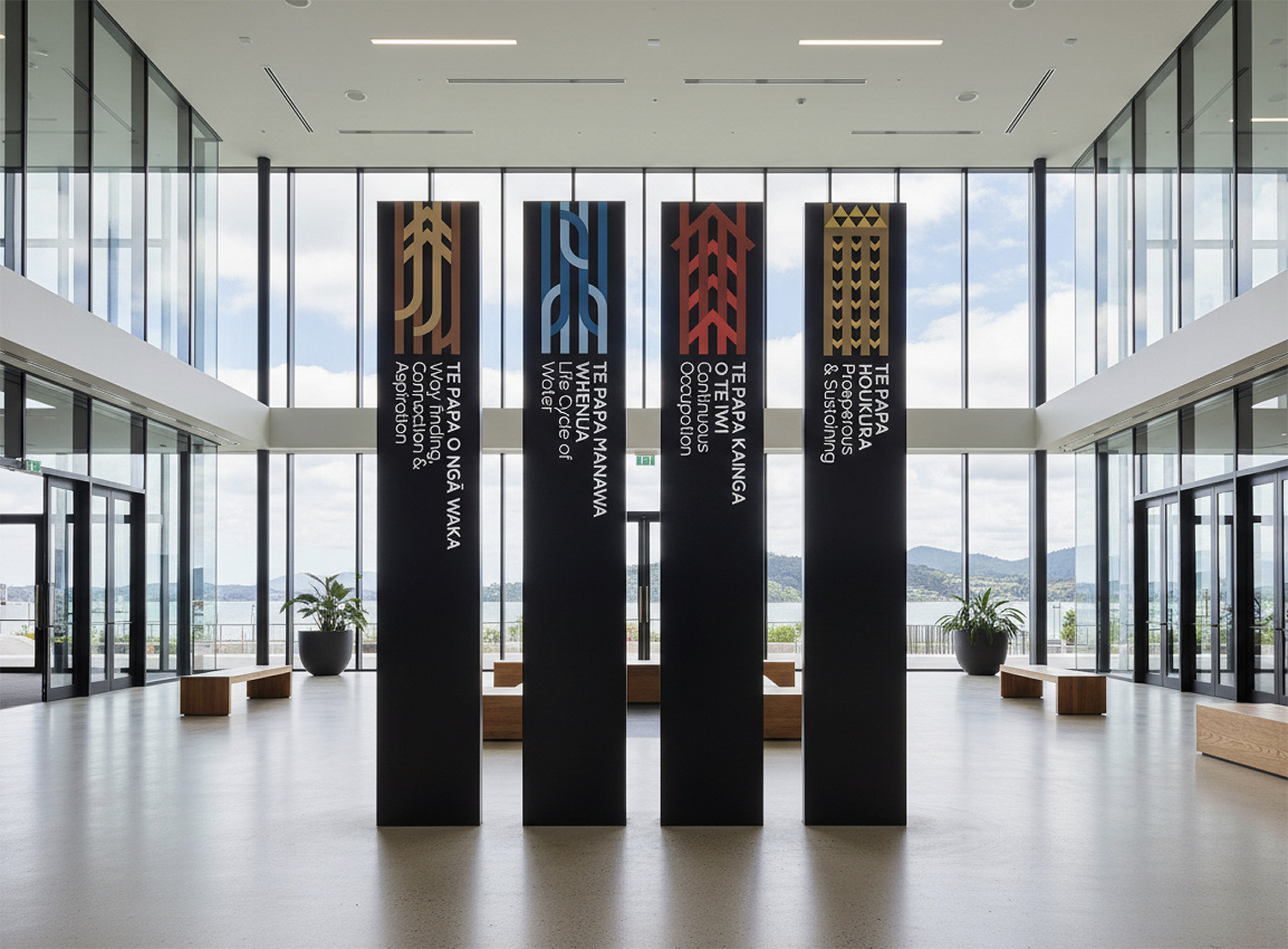
As well as the individual identities, four Pou have been designed to express the Values of the Te Manawataki o Te Papa community.
The aesthetic is contemporary and individual designs are inspired by taonga from Tauranga Museum’s collection and cultural narratives developed Otamataha Trust.
The Te Manawataki o Te Papa brand has been developed in collaboration with:
Kelcy Taratoa - Te Kahui Toi
Quinton Bidois - Te Kahui Toi
Peri Kohu - Otamataha Trust
Puhirake Ihaka - Otamataha Trust
Buddy Mikaere - Otamataha Trust
Otamataha Trustees representing ngā hapū:
– Ngati Tapu me Te Materawaho
– Ngai Tamarawaho
Josh Te Kani - Te Pou Ahurea
Carlo Ellis - Te Aro Pū
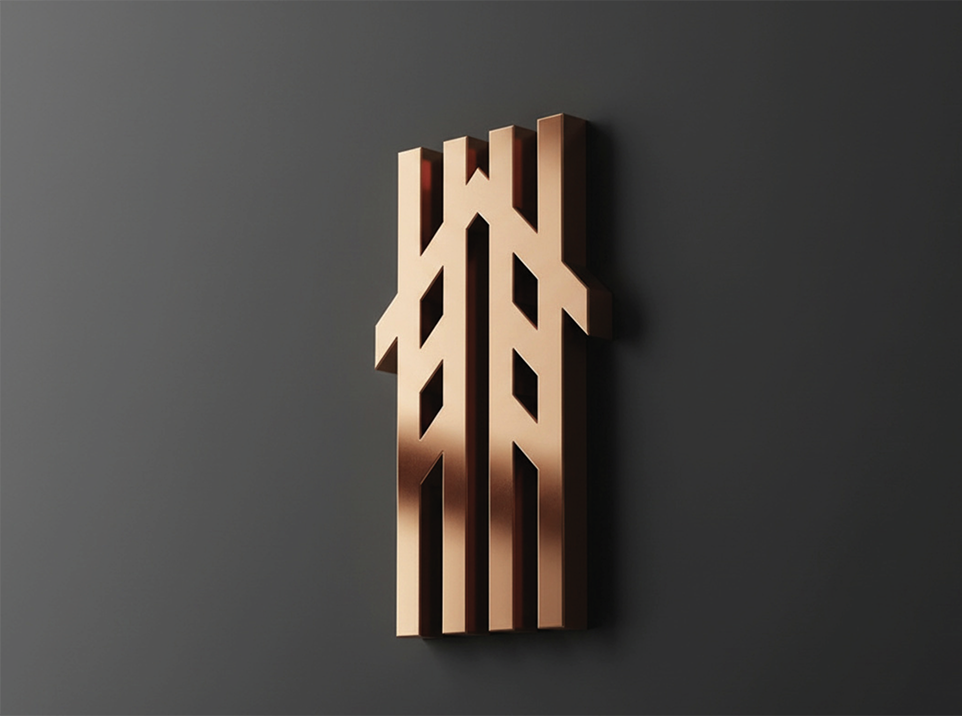
TE MANAWATAKI O TE PAPA
THE PRECINCT MASTER BRAND
Cultural Reference: “Ko Kahutia-te-Rangi, te tangata e aitia ki runga te takapau wharanui.”
Māori Architecture: Wharenui – Whare Pātaka – Waharoa.
The master brand identity design for Te Manawataki o Te Papa, adopts the formal architectural features synonymous with customary Māori architecture:
+ Wharenui / Whare Tupuna (main community facility dedicated to the founding ancestor – most often fully adorned with toi Māori: kōwhaiwhai, whakairo rākau, and whakairo raranga)
+ Whare Pātaka (a raised structure fully adorned with toi Māori, and used to store items of importance)
+ Waharoa (a formal threshold structure displaying whakapapa, demarcating boundaries, and the entrance to the marae complex).
Specifically, the brand identity acknowledges customary Māori architecture as a symbol of hapū occupation, sophisticated cultural values and practices, including societal structures, and knowledge institutions for the management, protection, use, and distribution of natural resources at Te Papa.
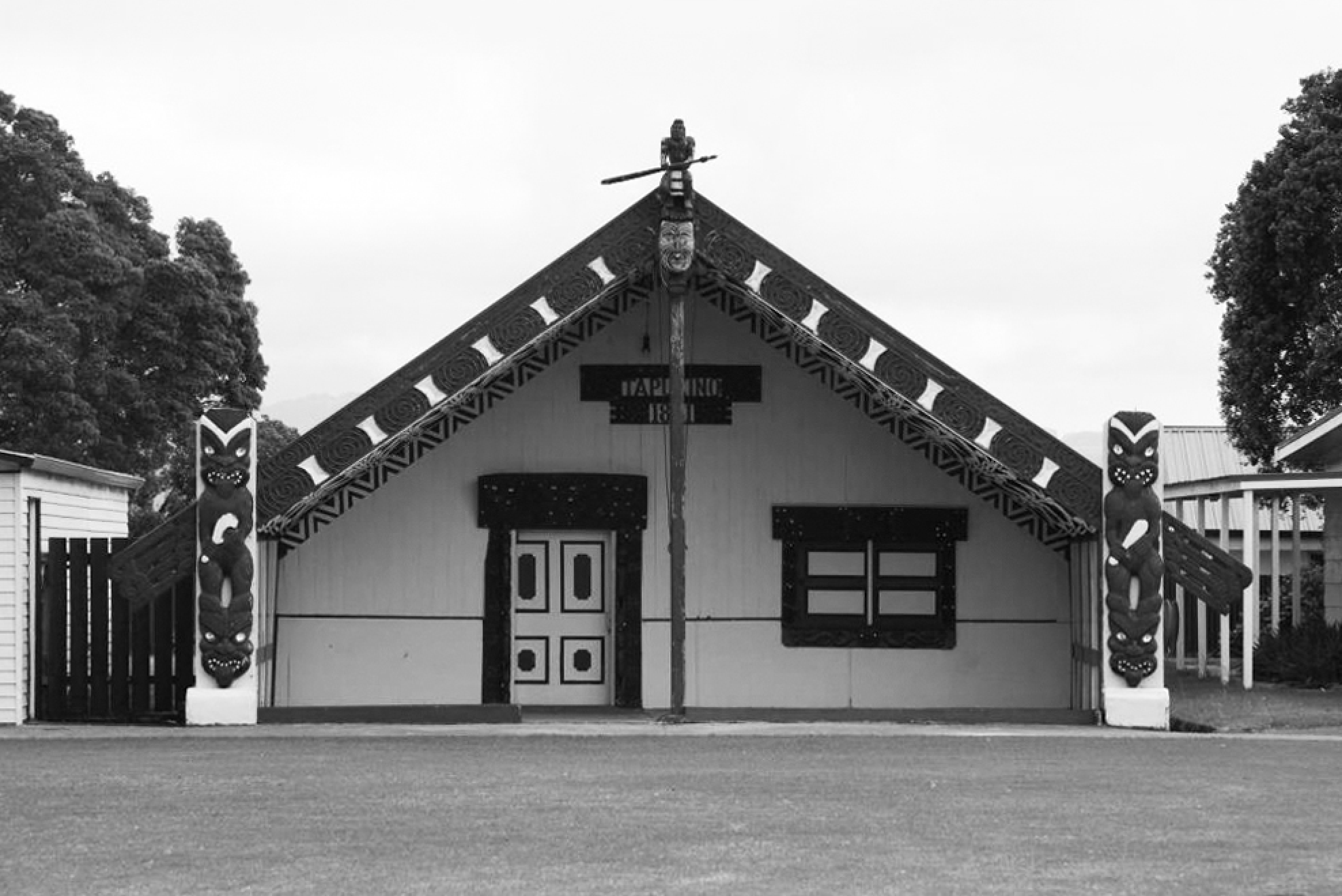
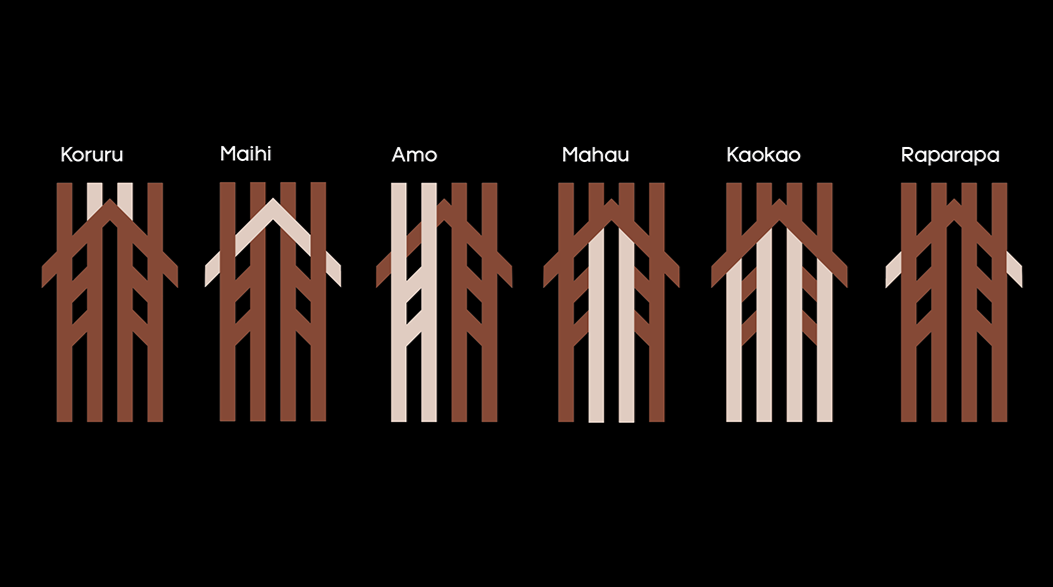
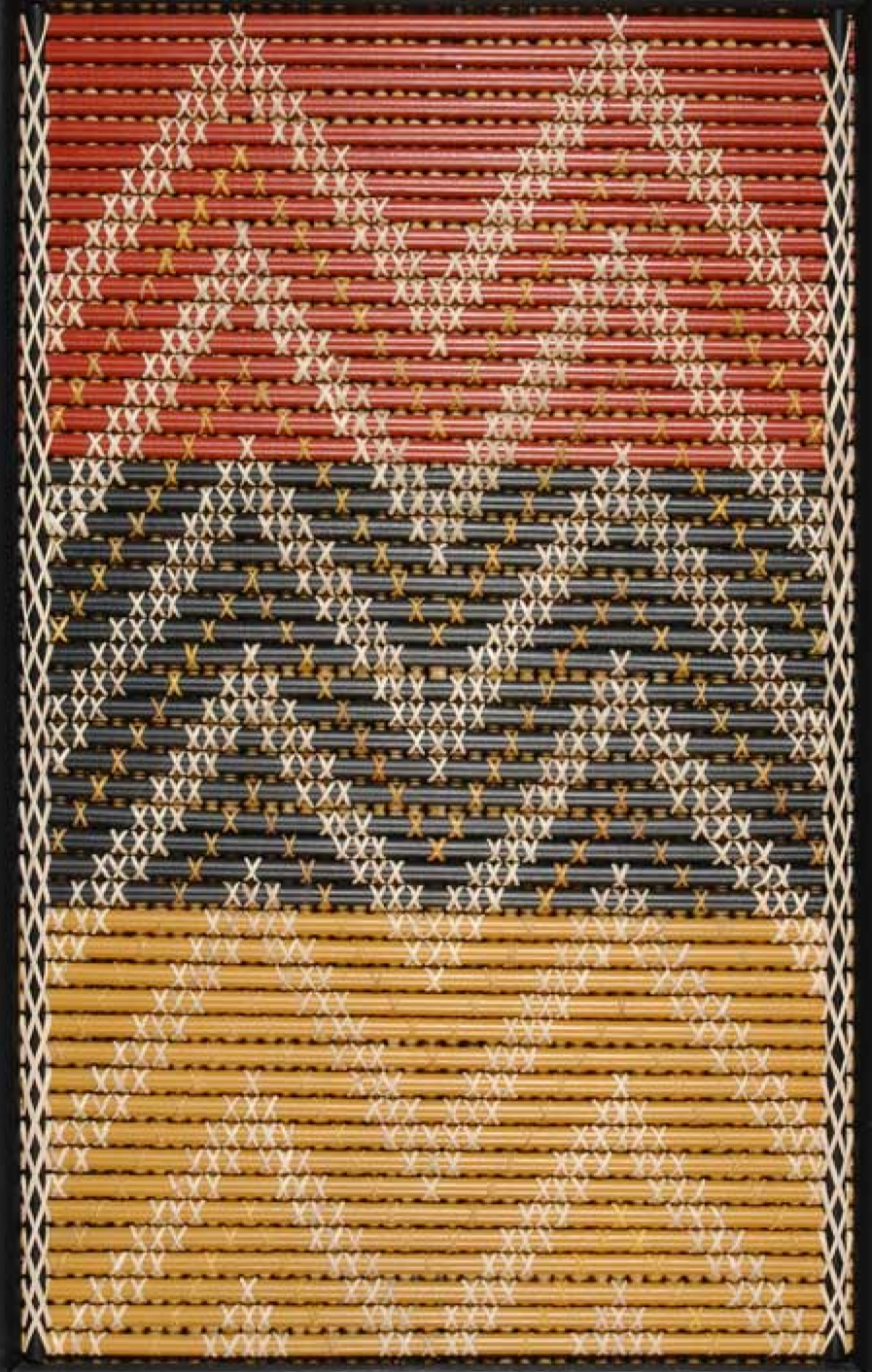
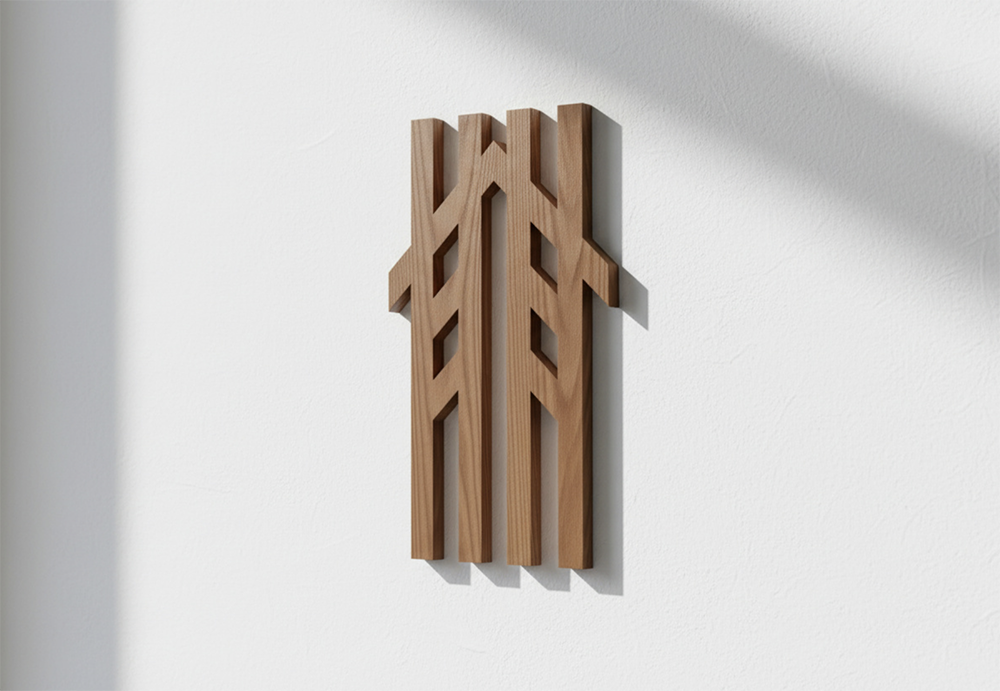
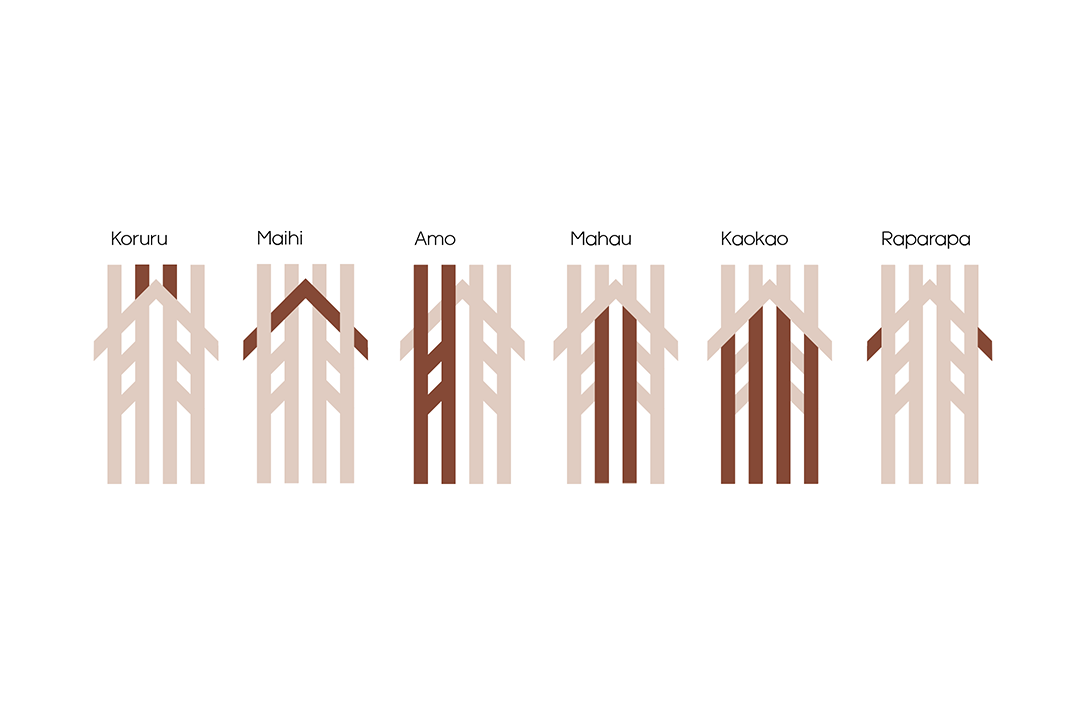
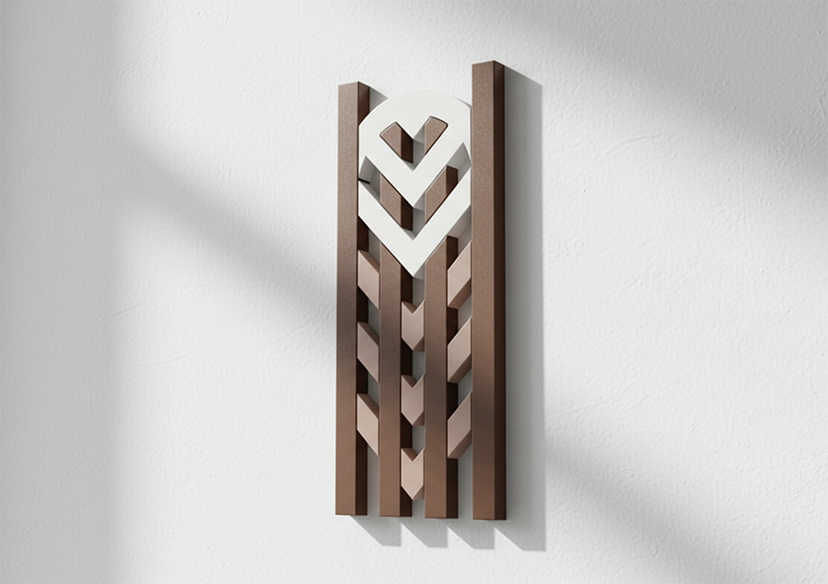
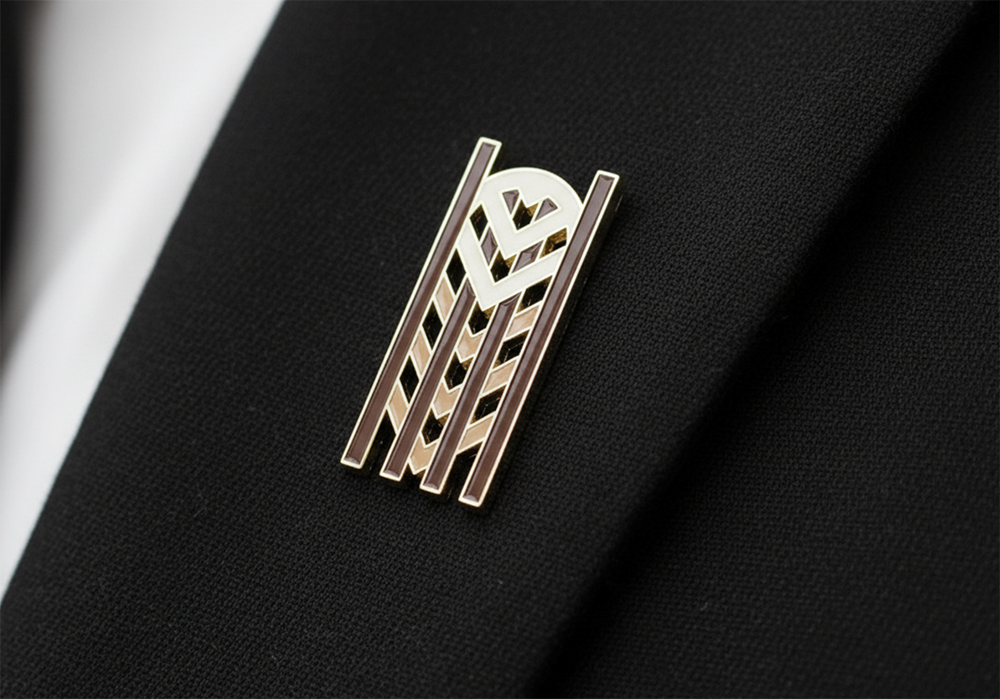
The brand design characteristics make a distinct correlation to the frontage of the Whare Tupuna, with the top centre bars referencing the koruru, the pinnacle of the gable end; the chevron extending out from the four vertical bars, brings in the maihi and raparapa, the gable frontage of the whare structure; the amo is imagined in the outer vertical bars; the mahau is positioned under the maihi; and finally the tukutuku chevron pattern kaokao, is identified in the centre.
Like the Wharenui being emblematic of the founding ancestor, the kaokao pattern is an important symbol for the assertion of legitimacy in regards to rights and interests, as this whakatauki clearly articulates, “Ko Kahutia-te-Rangi, te tangata e aitia ki runga te takapau wharanui”. Kahutia-te-rangi has the legitimate claim over his brother Ruatapu, because he was conceived and born on the takapau wharenui, a sacred woven mat used ceremonially in matters of great importance. The kaokao pattern, like all patterns, is infused with a multiplicity of cultural concepts and meanings, a manifestation of a conceptual and philosophical framing of the natural world.
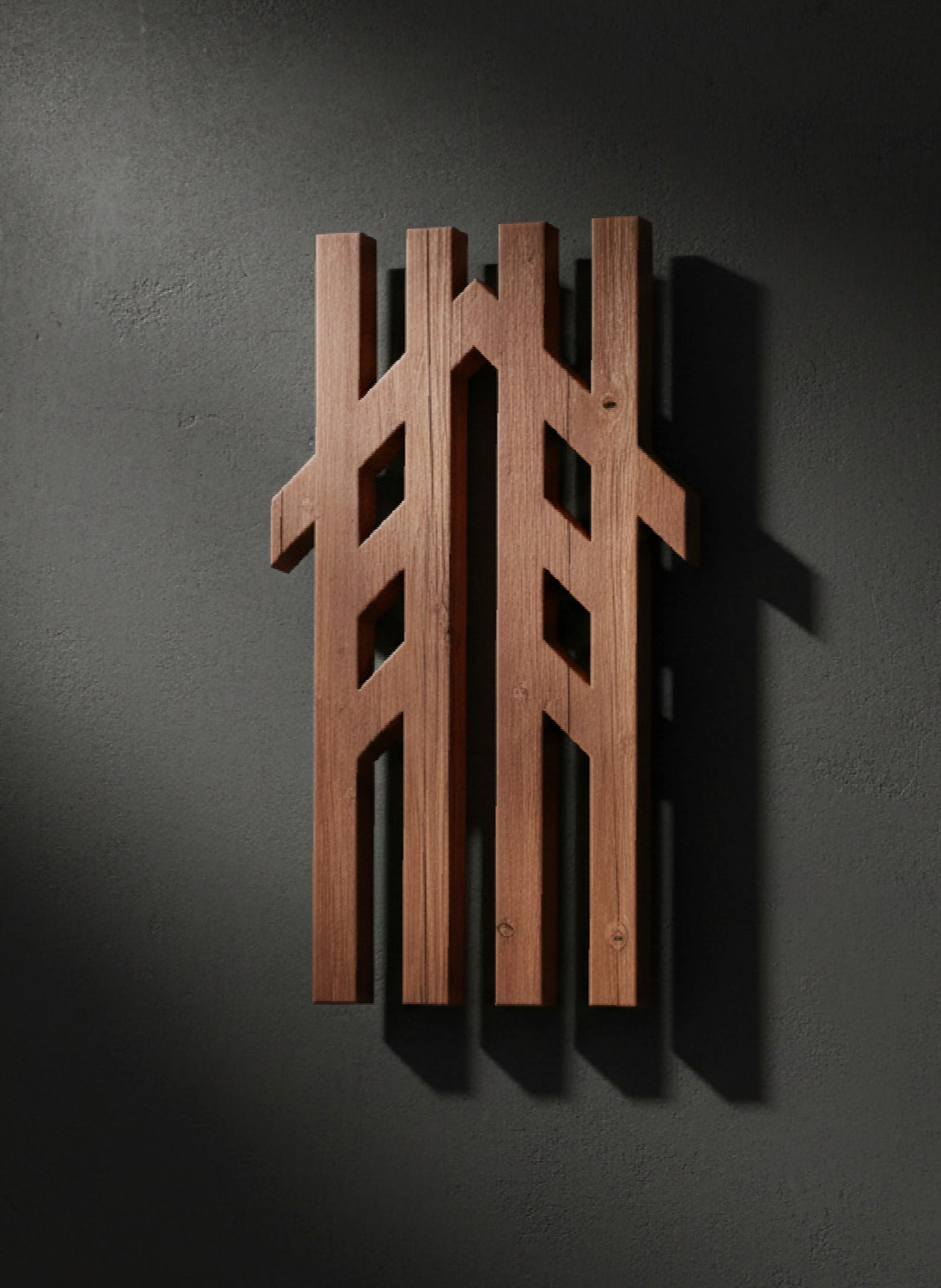
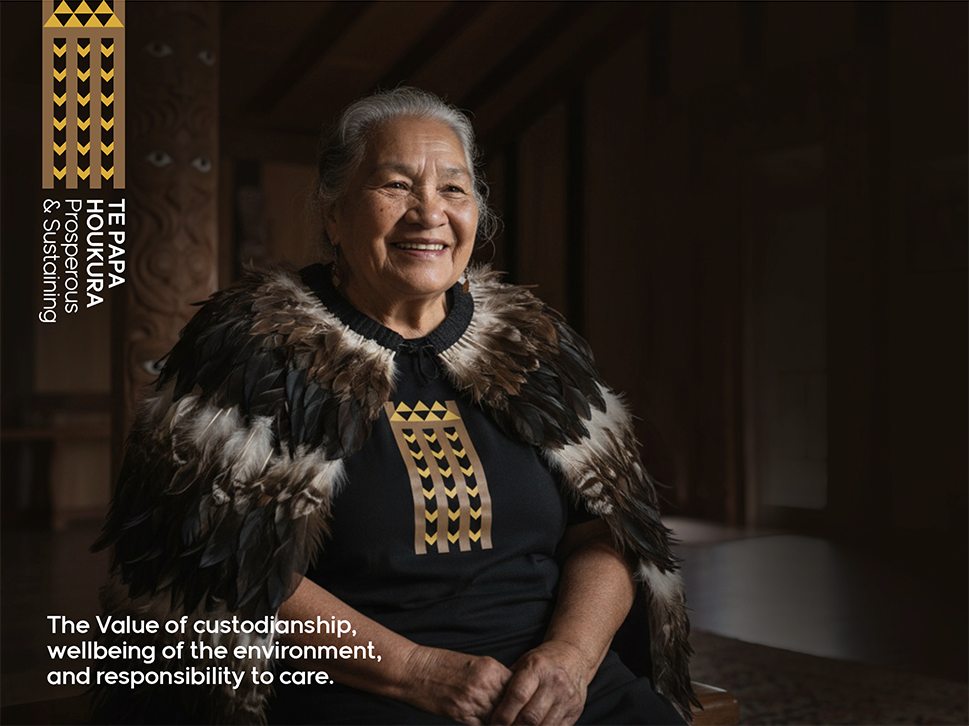
Pou Values
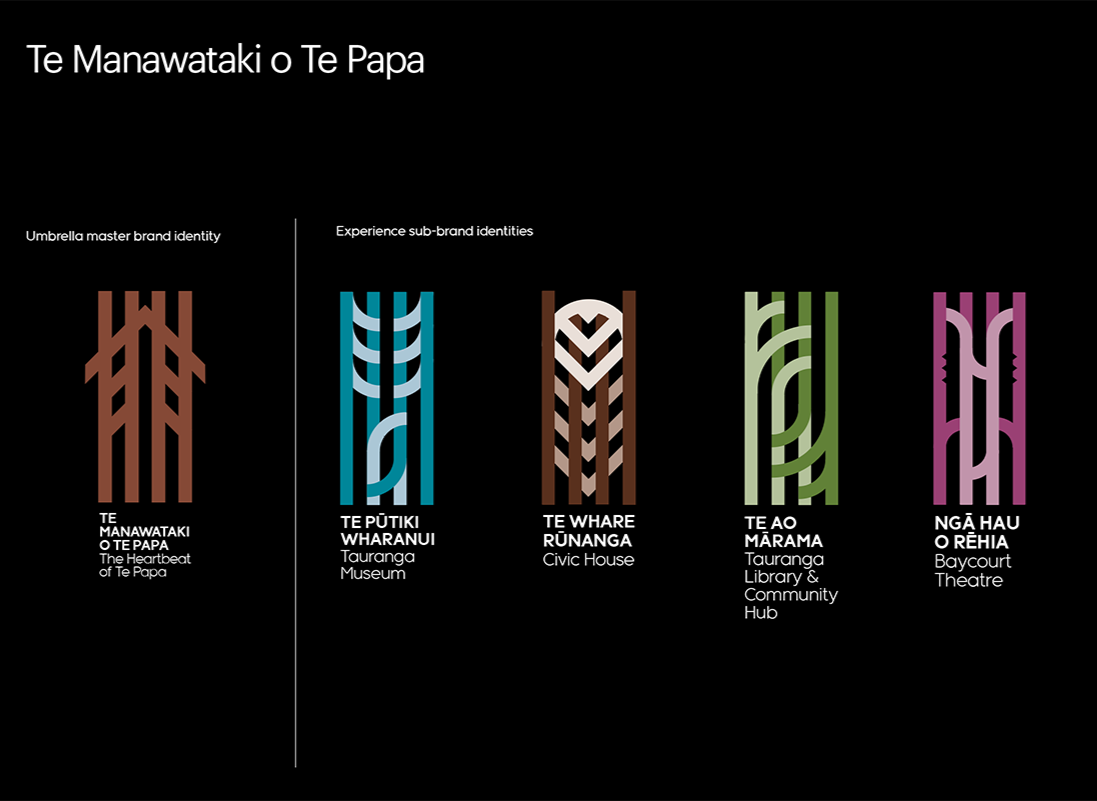
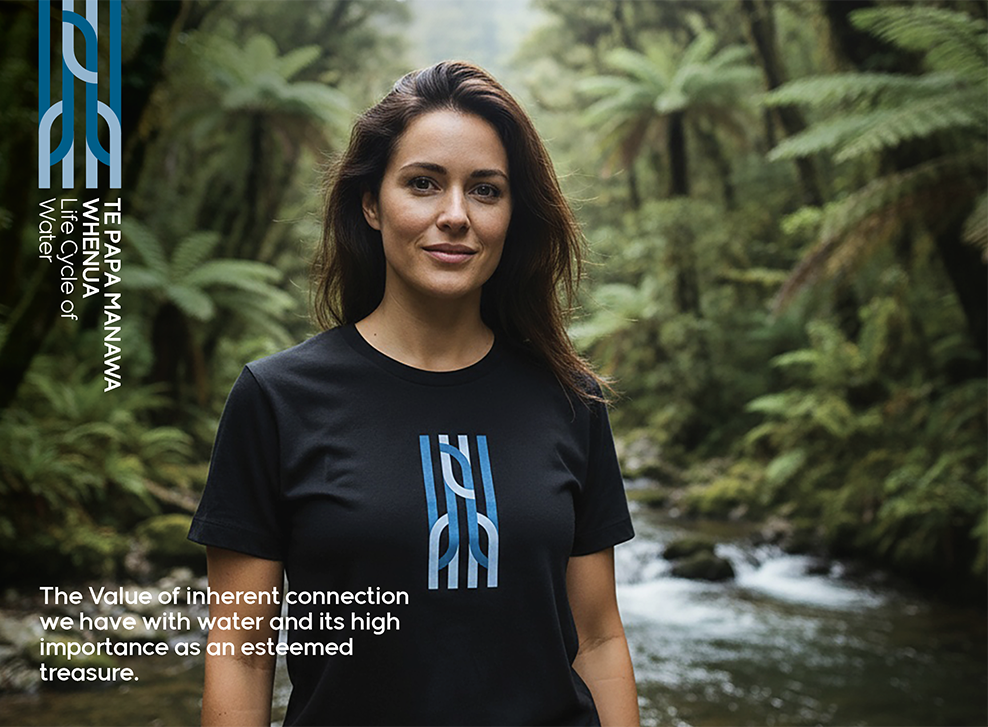
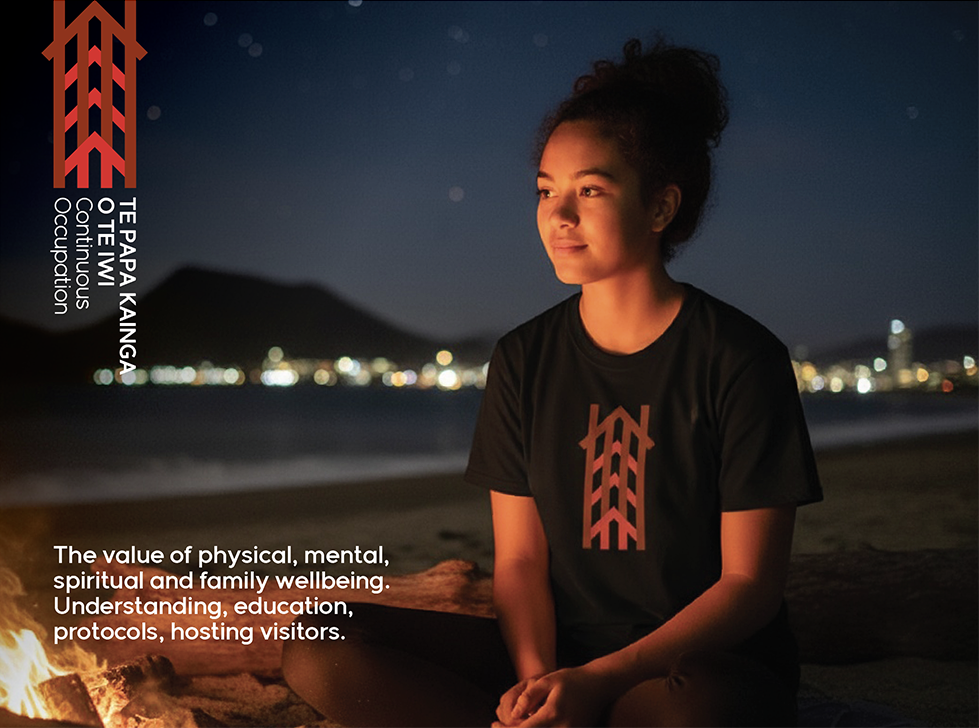
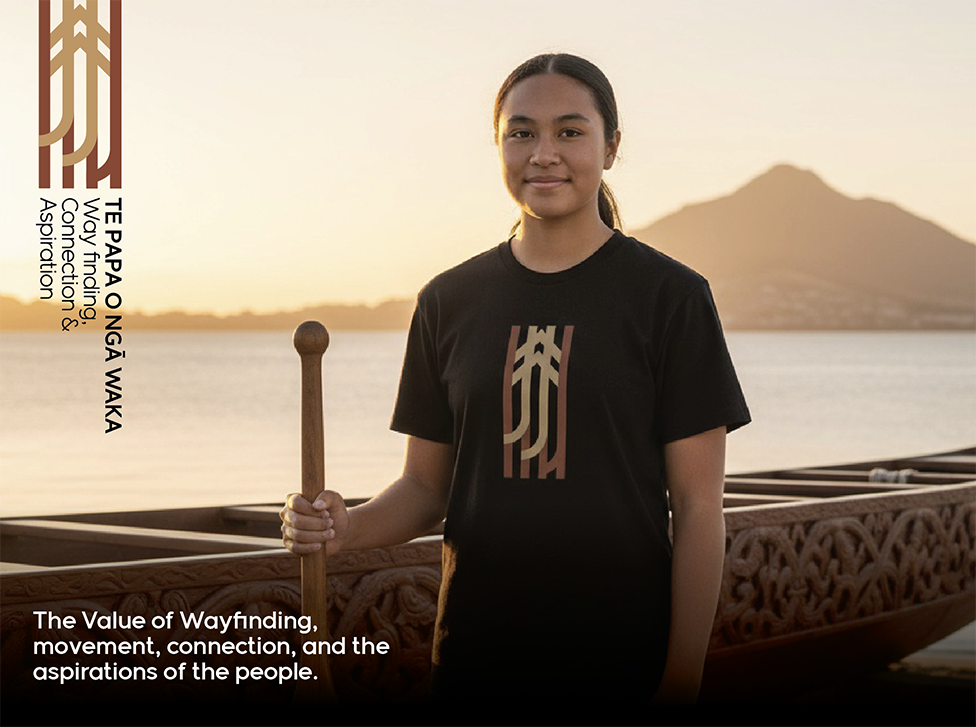
Four Pou represent the guiding values that drive the Te Manawataki o Te Papa brand experience. They form the central visual element on which the precinct master brand and the facility sub-brand identities are built.
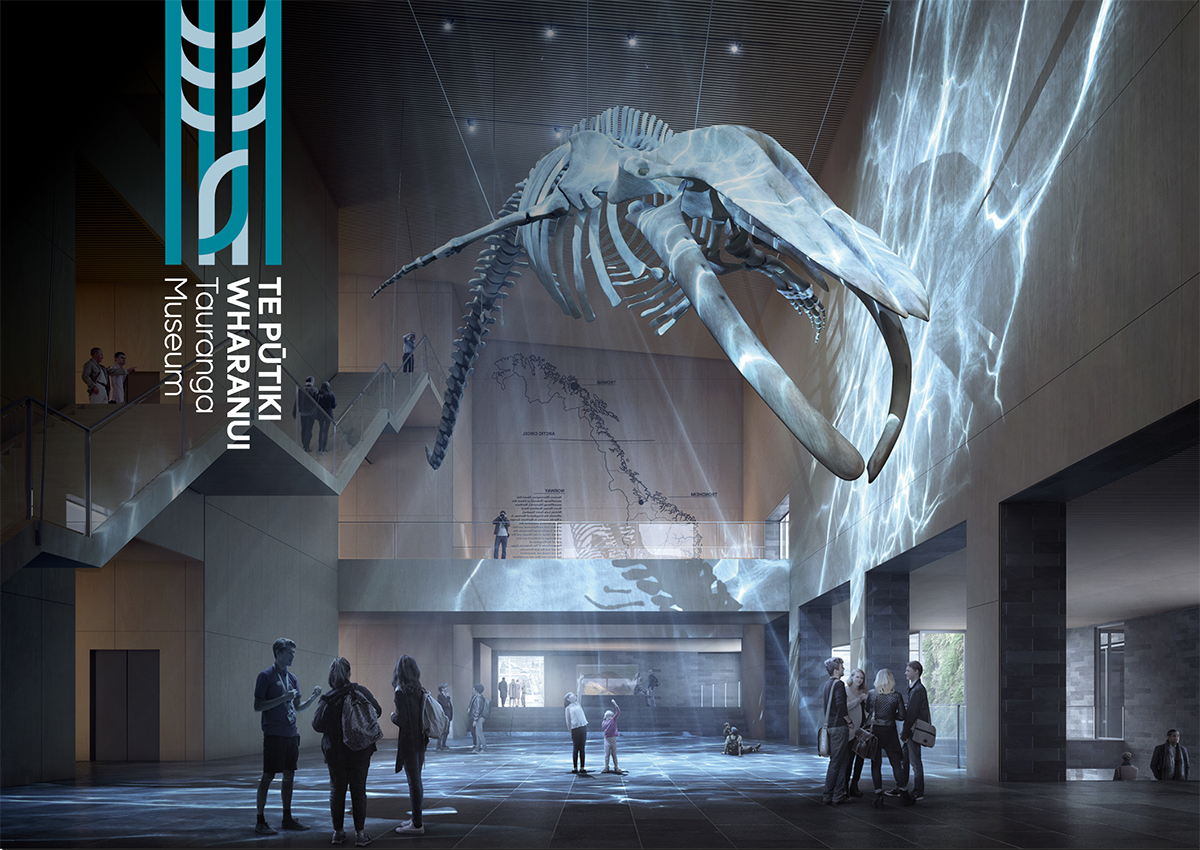
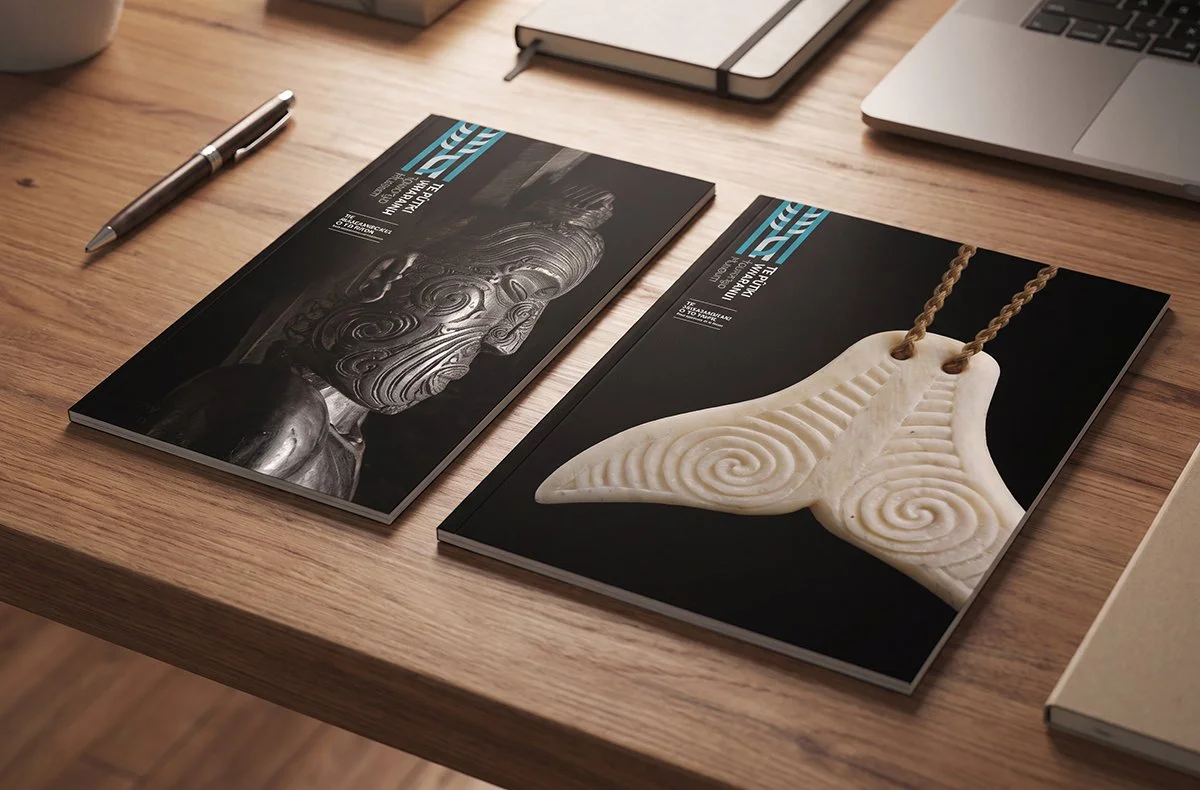
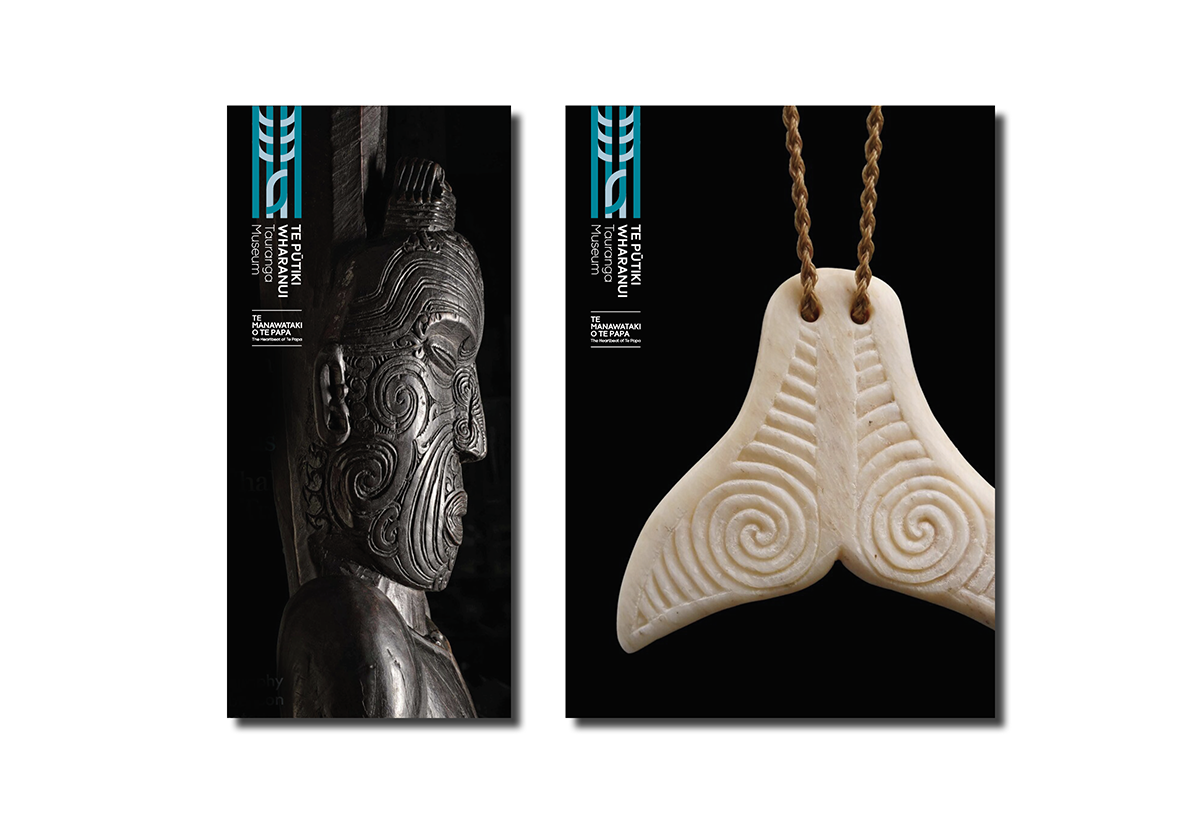
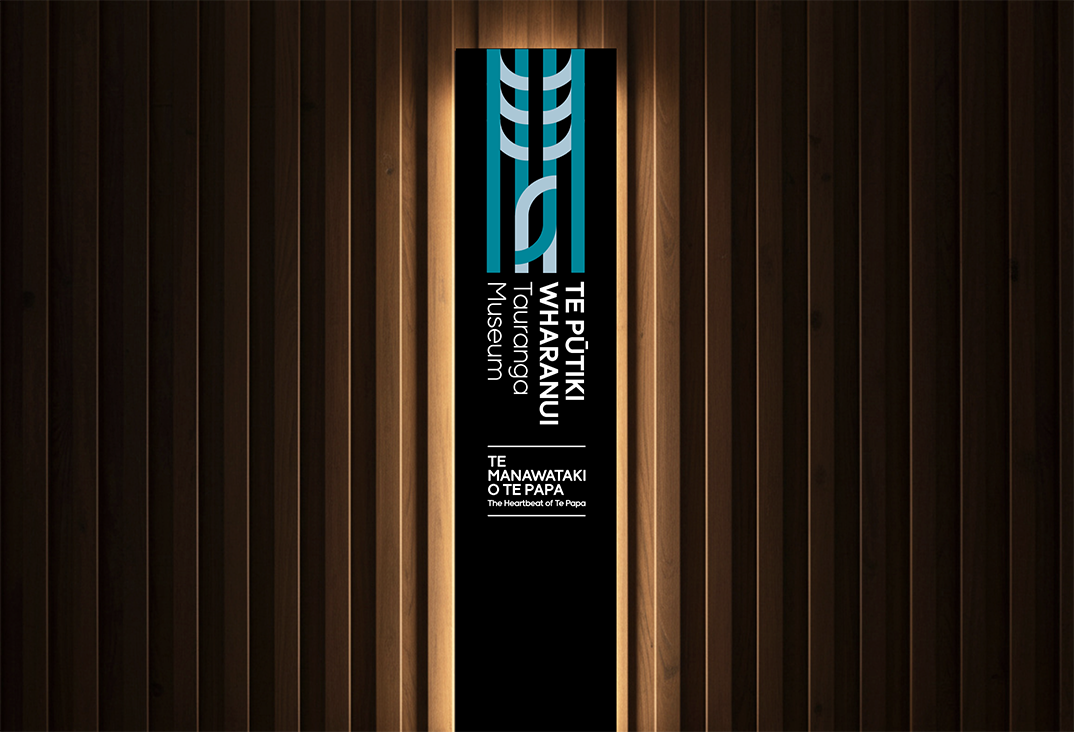
TE PŪTIKI WHARANUI
Tauranga Museum
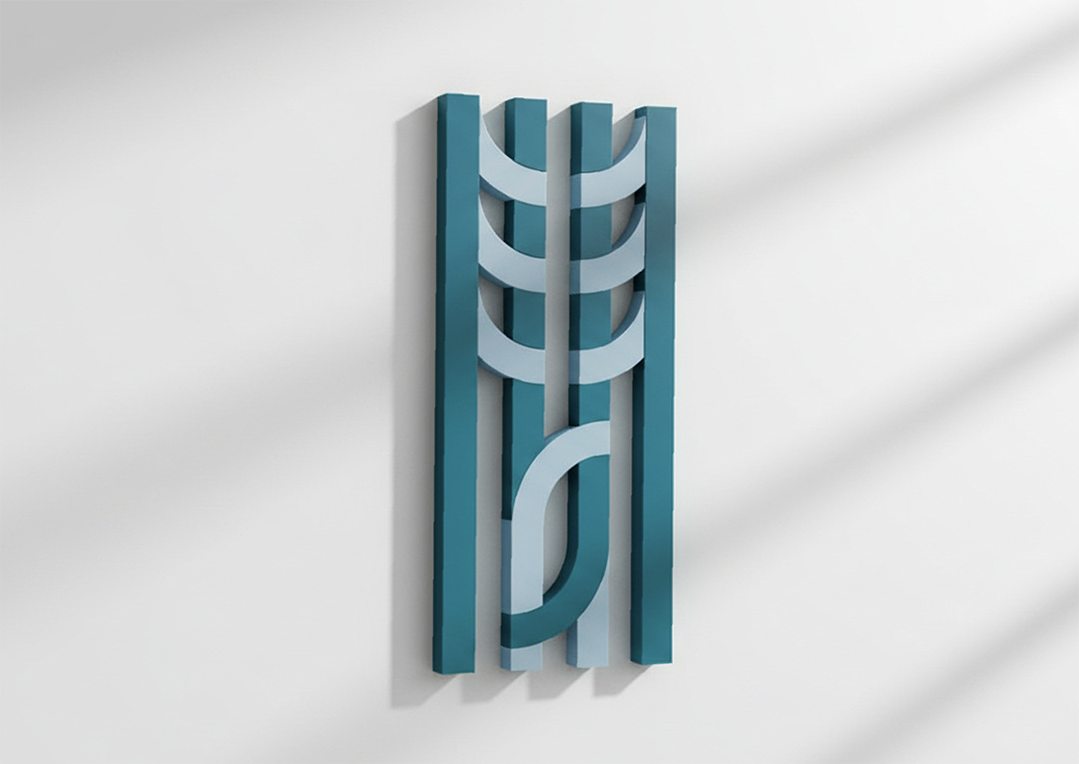
In Tauranga Moana, an ancestral story was immortalised to become a sacred tohu whenua - a landmark ridge line stretching from the Hautere, a forest behind Ōropi, north toward to the moana at Pāpāmoa. When viewing the mountain range from either Matapihi or Maungatapu across the Rangataua, Mangatawa is the northern end of this ridgeline. When the mountain range was taken in full view, it resembled a tohorā (whale). The whale’s eye was at the northern end at Maungamana.
The museum identity design represents the exhale — the forceful surge of air and wairua (spirit) through the pihapiha of the tohorā, a symbol of vitality. The flowing lines, the curves and contours, all speak to the breath of the tohorā in that moment — the sacred inhale of the sacred puna wai at Karikari, and the final exhale before becoming a permanent feature of the whenua.
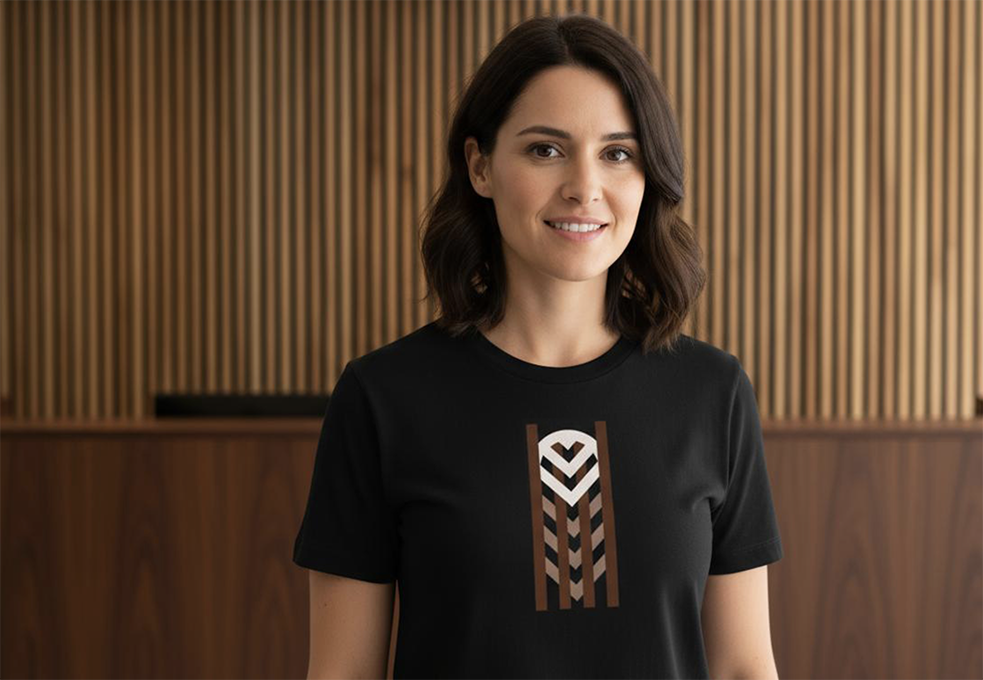
TE WHARE RŪNANGA
Civic House
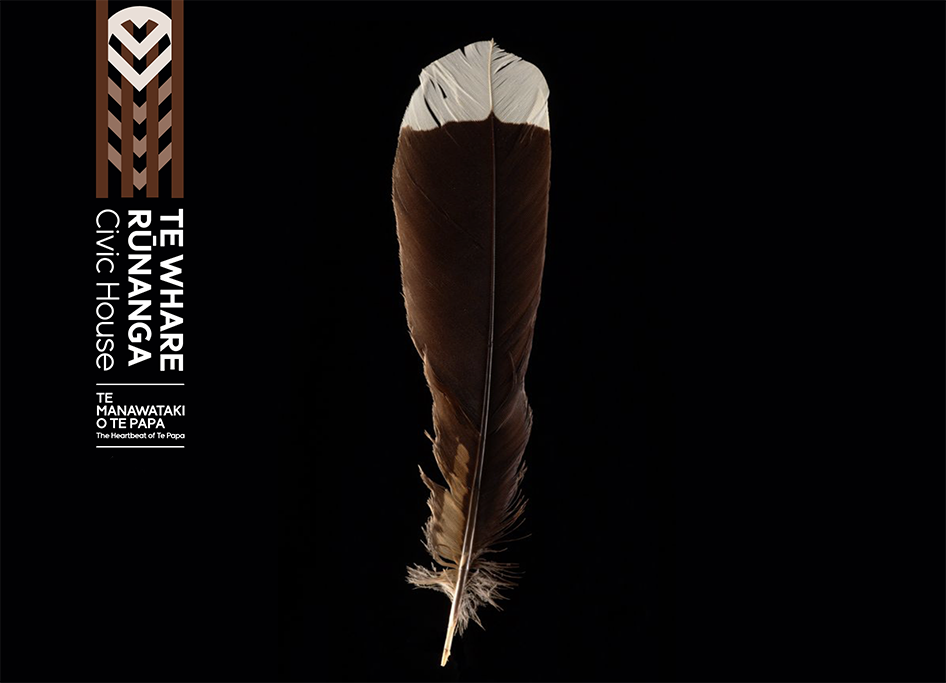
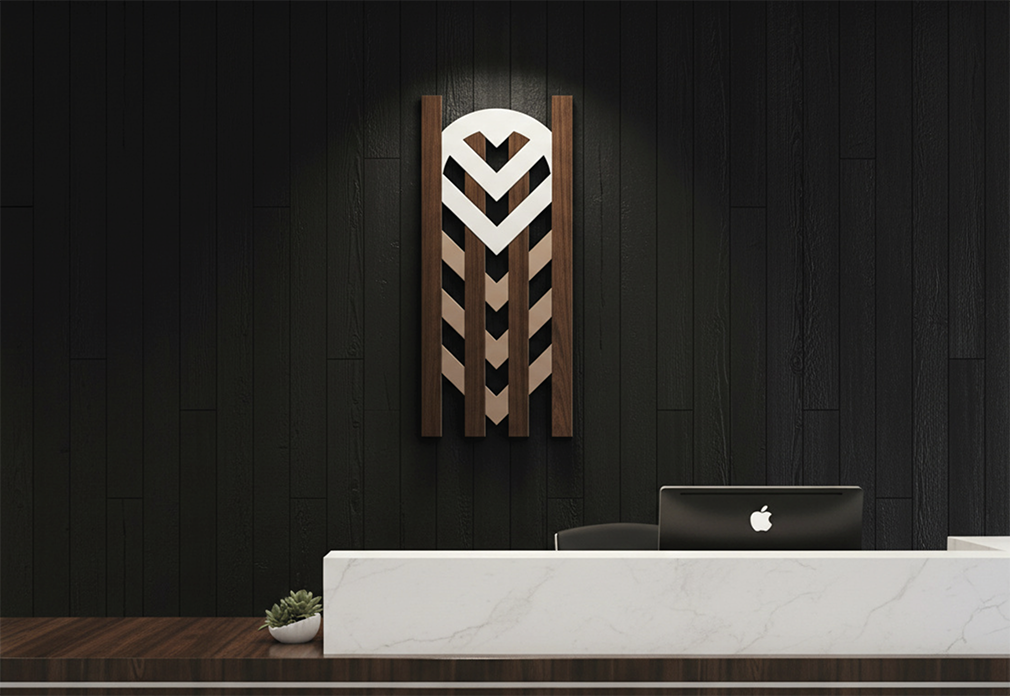
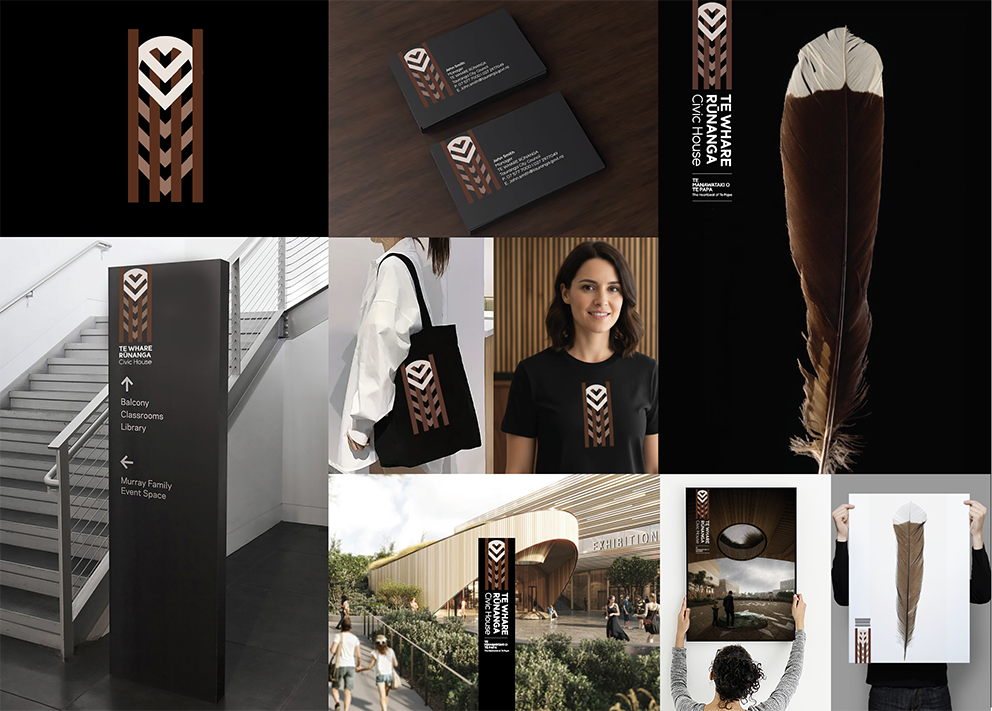
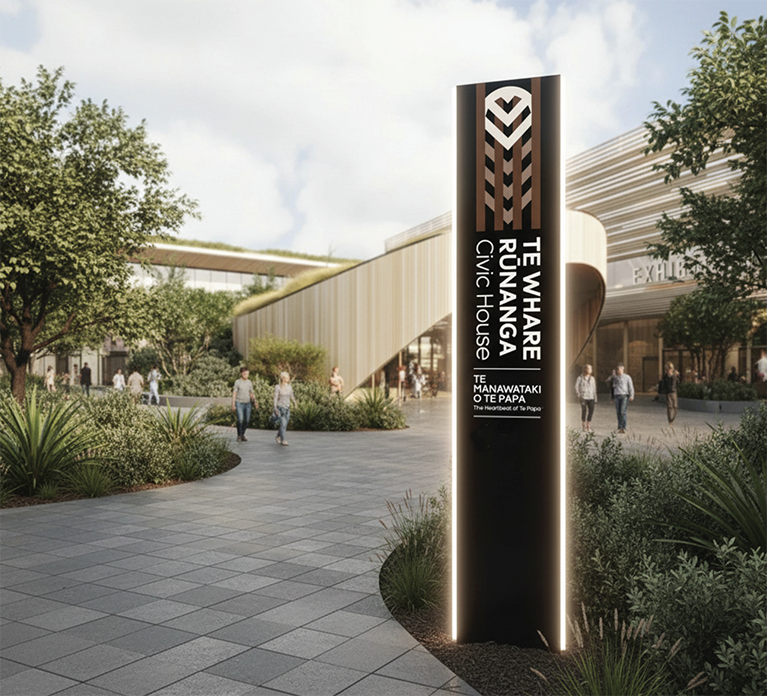
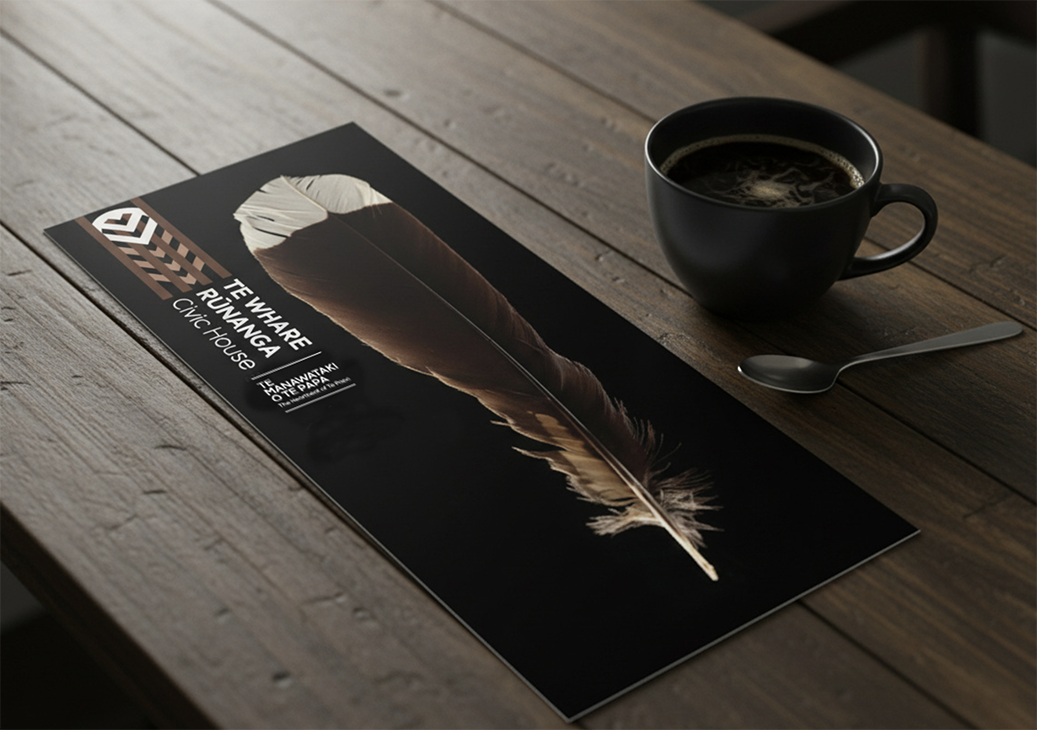
The brand identity for Te Whare Rūnanga Civic House is a pattern depicting the rau of Manu Huia (single Huia feather). This design honours the faithful and dutiful service of Manu-Tea who travelled a great distance to complete his mission.
The tohu design is a symbol of the pure voice of the manu and its steadfastness as a servant. This a reminder to those in community service, to ensure their words and actions are likened unto Ngā manu a Rehua, true and steadfast in their resolve to serve faithfully in the interests of community wellbeing.
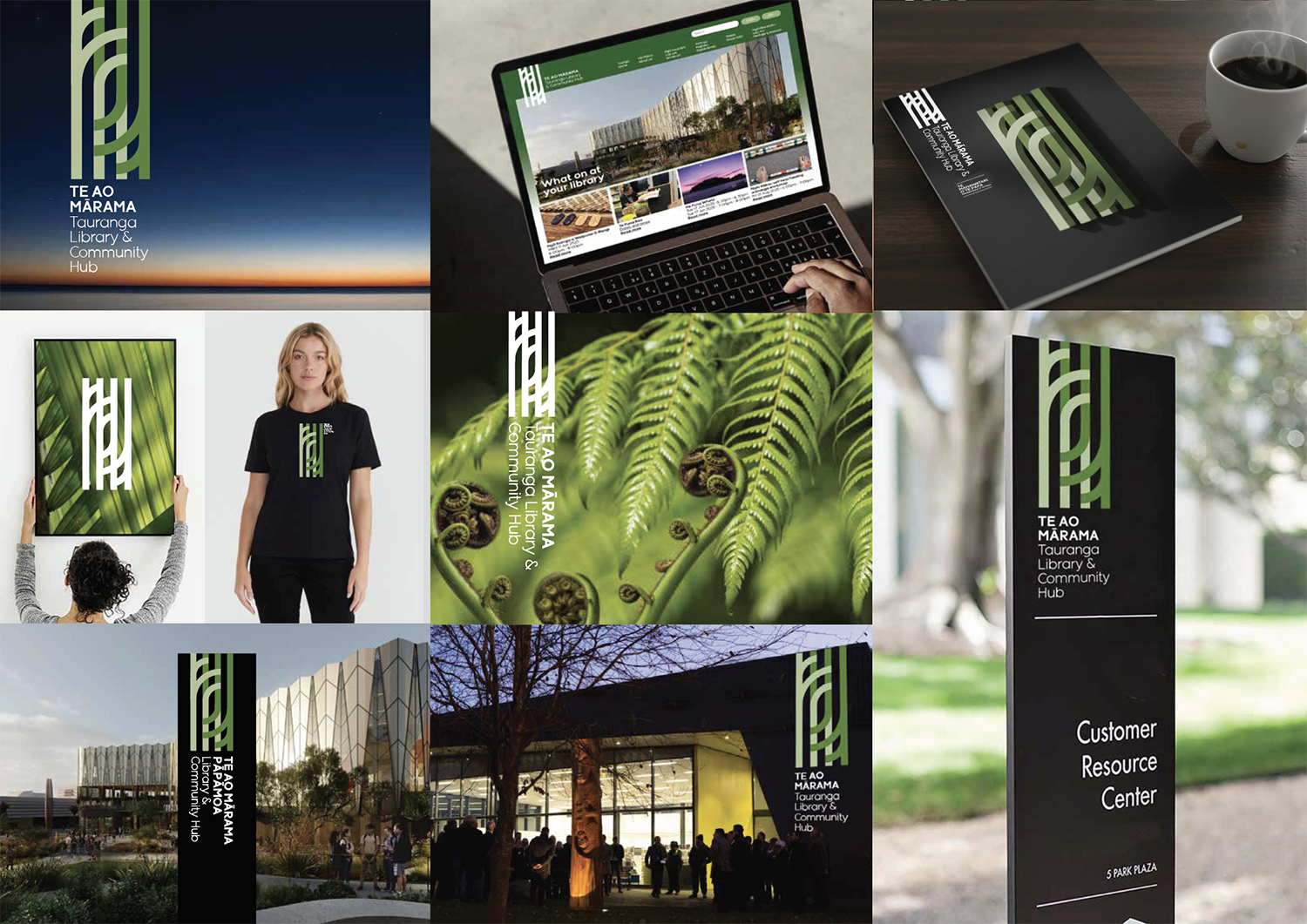
TE AO MĀRAMA
Library & Community Hub
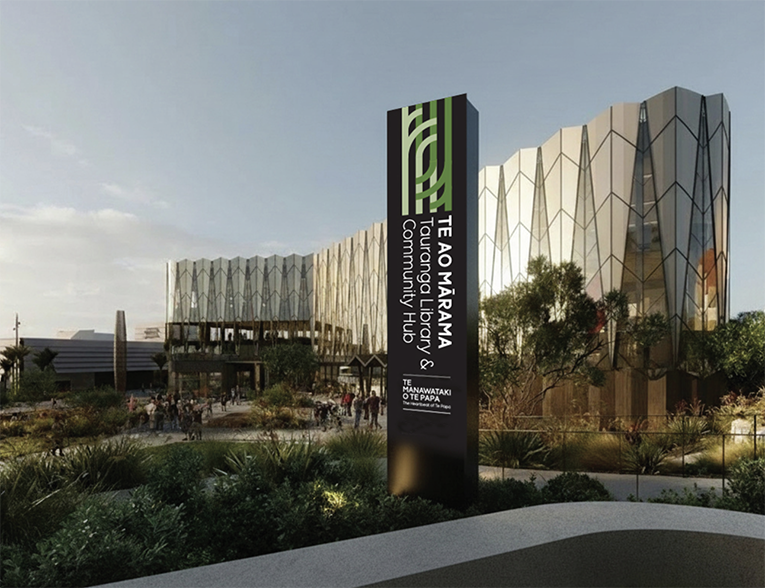
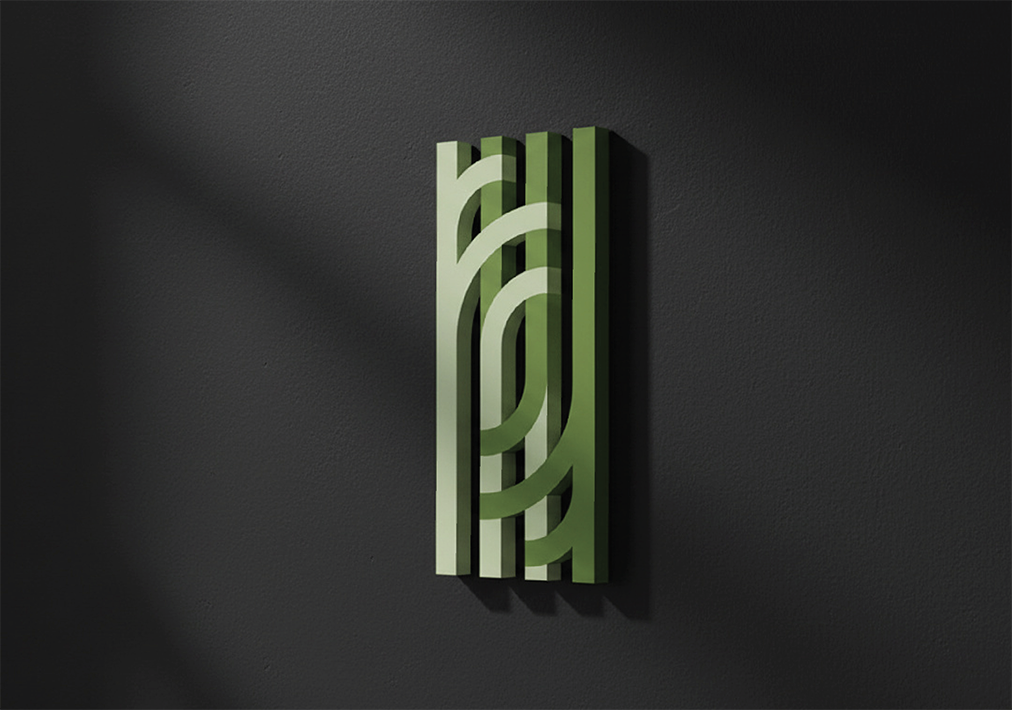
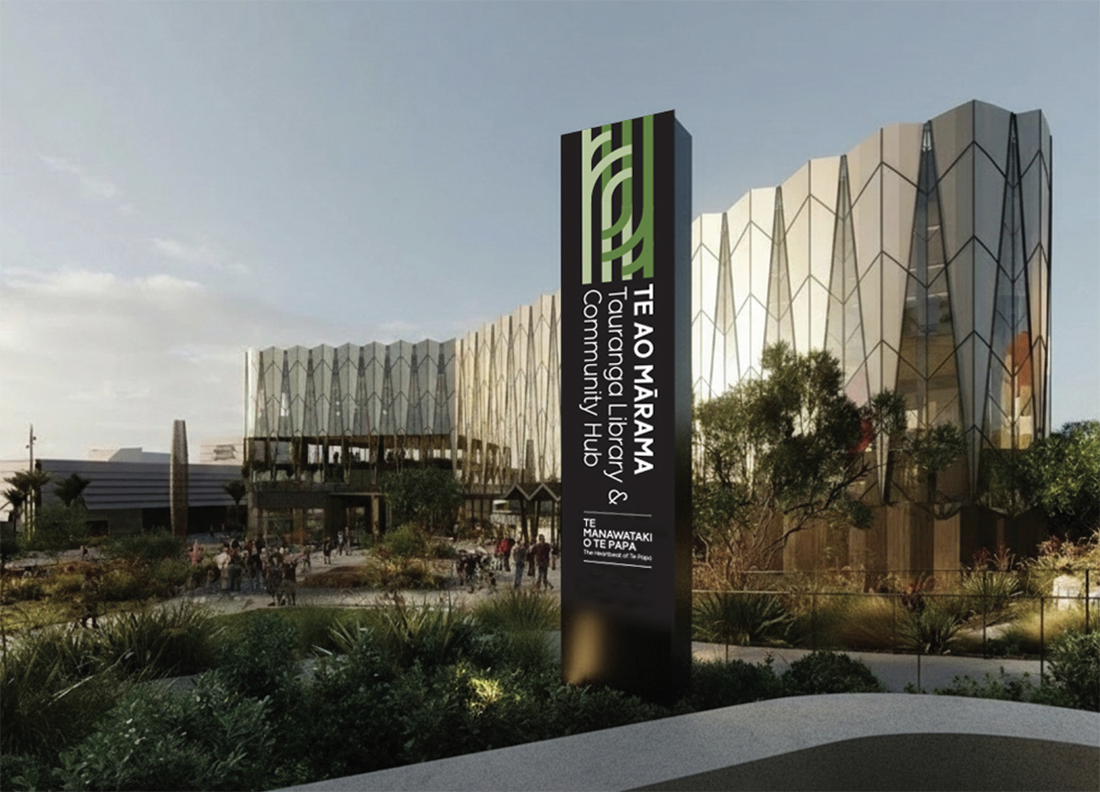
The Rauru spiral is an ancient Māori design form that speaks deeply to the cosmic narrative of Ranginui and Papatūānuku, the sky father and the earth mother.
In this design, the spiral reflects the intertwining embrace of Rangi and Papa — their eternal love wrapping around one another in darkness, as they once were, united in a close and loving embrace. Each arm of the spiral represents one of them, reaching, holding, connected.
As the spiral journeys inward, the arms meet at the centre, the point of perfect union and intimacy. Yet from this centre emerges the first spark of light — Te Ao Mārama — light breaks through. This is the moment of transformation, the sacred separation of Ranginui and Papatūānuku by Tāne, their son, who forced the sky and earth apart to allow light and space to emerge between them and bringing forth life.


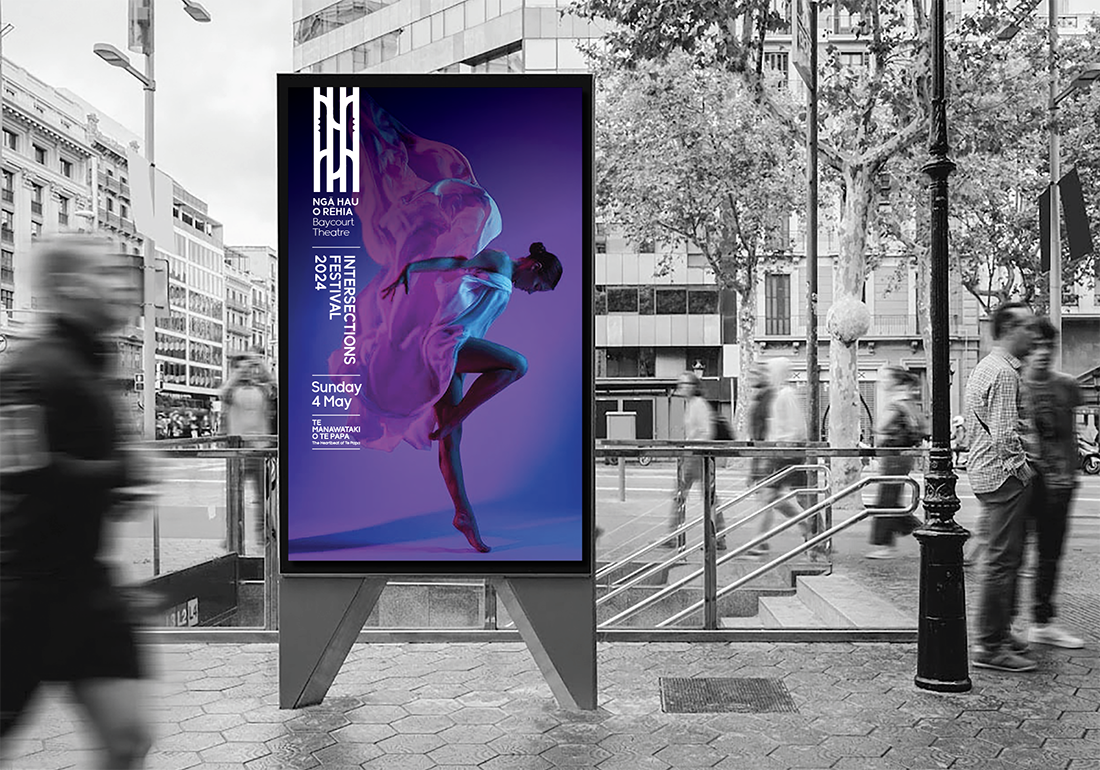
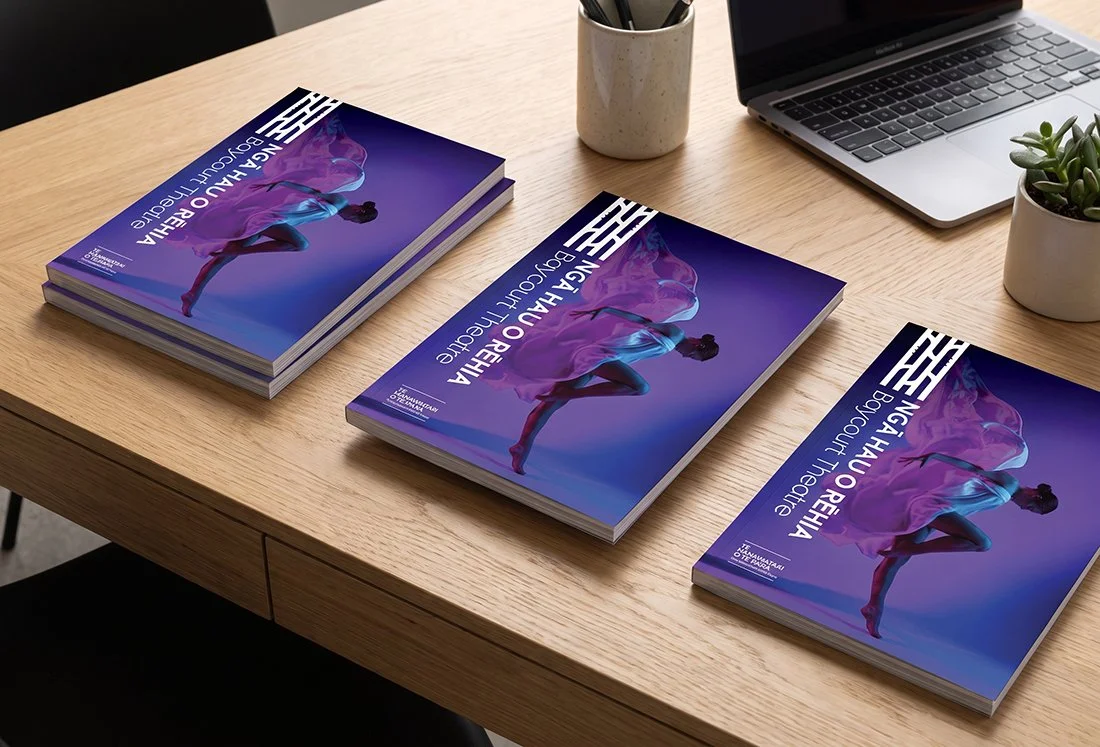
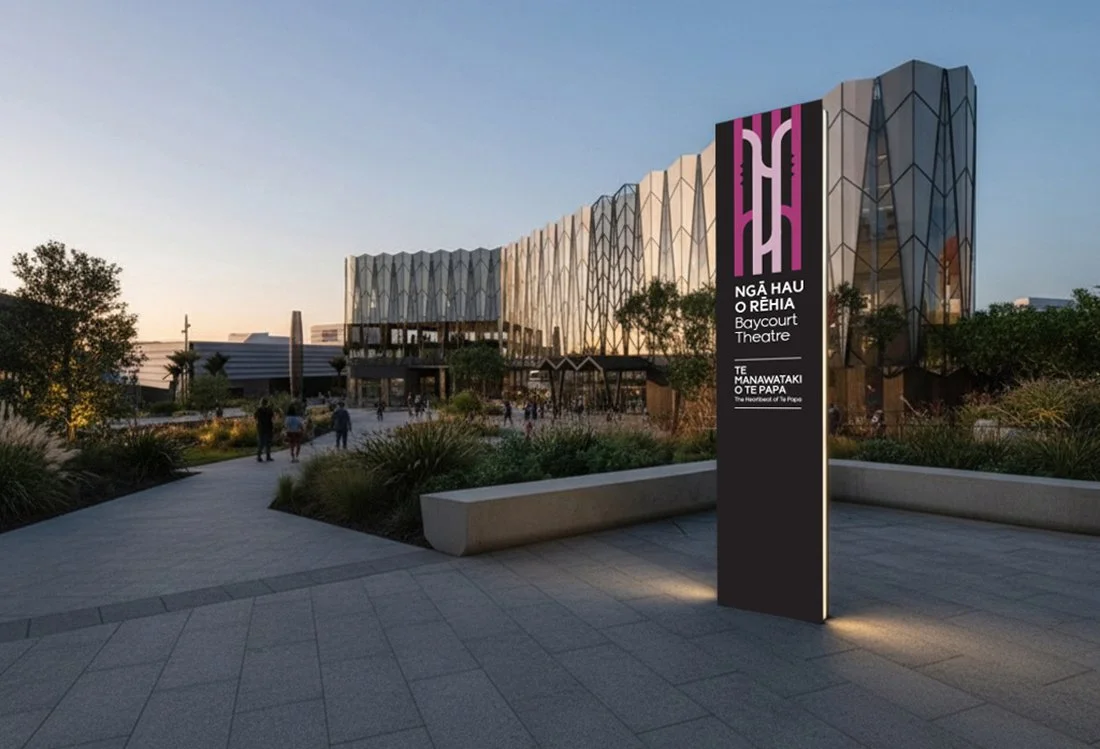
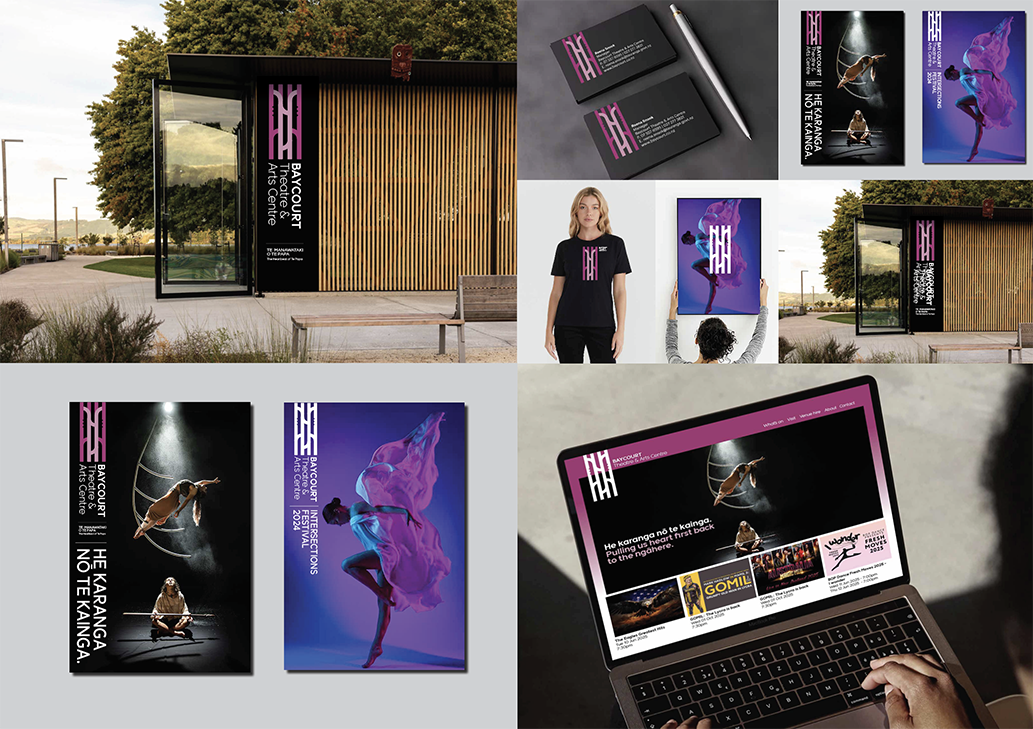
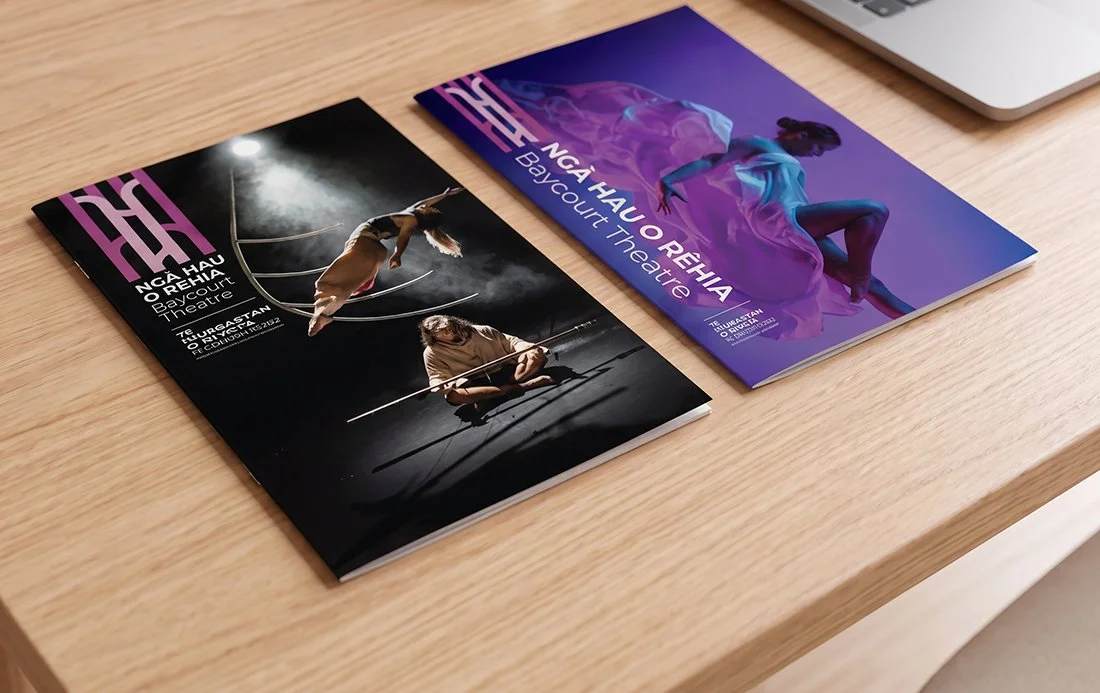
NGĀ HAU O RĒHIA
Baycourt Theatre
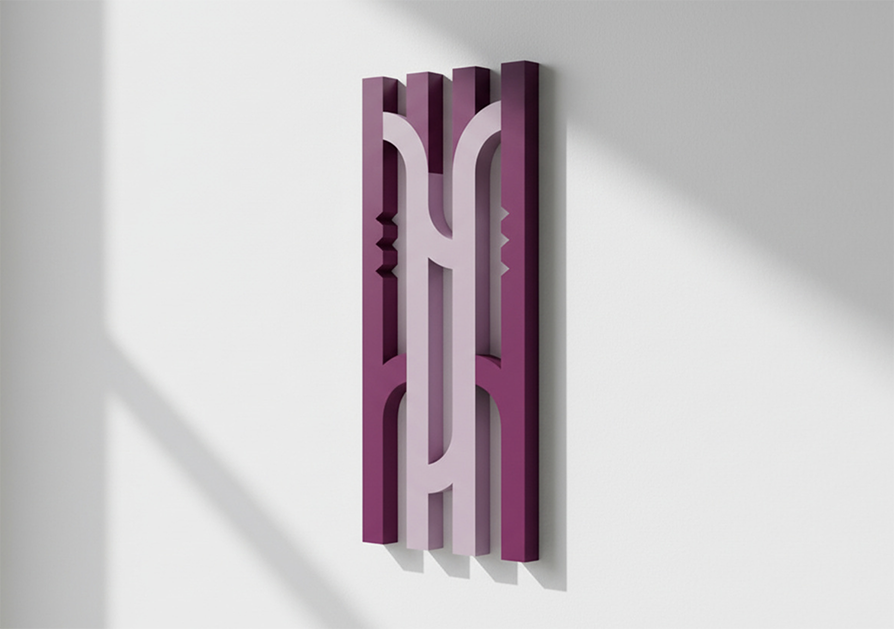
This cultural design is a tribute to the birth of collective Māori performance through the sacred institution of Te Whare Tapere.
The cultural design’s forms and repetition mirror the precision and purpose of the performance of Te Whare Tapere — how each element, like each performer, had a role to play in the collective act of pursuing justice. Taratara-a-Kae is a pattern that layers societal structures and practices, values and laws, consequences and retribution. The pattern Taratara-ā-Kae refers directly to the narrative symbolising both the deceit of Kae, and the complex artistry used by Te Whare Tapere to capture and extract him.